





Top Lifetime ISAs (LISAs)
How they work, who they're for and how to get the top rates

A Lifetime ISA (LISA) can be opened by anyone aged between 18 and 39. You can use one to save up to £4,000 a year, towards either a first home costing up to £450,000 or for retirement, with the state adding a bonus of up to £1,000 a year on top. This guide explains how LISAs work, whether they're right for you and the best buys.
Budget 2026: Withdrawal fine axed for homes above £450k
From Thu 29 Oct, the penalty for using LISA savings to buy a home over £450,000 fell from 25% to 20%. This removes the effective 6.25% withdrawal charge – previously £625 for every £10,000 saved. The £450,000 property cap has remained unchanged since 2017. Full info in our Lifetime ISA changes news story.
In addition, the Government has confirmed that it will go ahead with the launch of the already trailed First-Time Buyer ISA, which will now come into force from April 2029.
Martin: Is a LISA still worth it?
In this episode of The Martin Lewis Podcast (2 Nov 2026), Martin explains how LISAs work, how they were affected by the Chancellor's Budget announcements and whether they're still a good choice for first-time buyers and savers.
🔊 BBC Sounds | Spotify | Apple Podcasts
(Or other places you get podcasts from.)
What is a Lifetime ISA?

Lifetime ISAs (LISAs) are government-backed savings or investment accounts designed to help UK residents aged 18 to 39 save for their first home or for retirement. You can save or invest up to £4,000 every tax year, with the state adding a 25% bonus on top of what you put in. That means you could get £1,000 of free cash annually.
There are two types – cash (savings) LISAs and stocks & shares (investment) LISAs – where all interest or investment growth (capital gains, dividends & bond interest) isn't ever taxable. They're very different – see how to decide which to type to go for.
Who can open one? UK residents aged 18 to 39. You can only pay into one LISA each tax year, although you can open more than one across different tax years – for example, you could pay into a cash LISA in one year, then open and pay into a shares LISA in another. You can transfer LISAs to other providers, though choice is limited once you hit 40.
How much can I save? Up to £4,000 each tax year until you’re 50. This counts towards your £20,000 annual ISA allowance.
How does the bonus work? The Government adds 25% on top of what you pay in – up to £1,000 a year. The bonus is paid monthly (if you've paid in that month) and takes four to nine weeks to arrive. The bonus doesn’t count towards your annual ISA allowance.
Under 40? Consider opening a LISA with just £1
LISAs aren't typical accounts – once you put money in, it can only be used towards a deposit on a first home, or for retirement after you're 60. Withdrawing for any other reason incurs a penalty, meaning you get back less than you put in.
But putting £1 in a LISA keeps your options open. You have to have had a LISA open for at least a year to use it, so putting £1 in now starts that clock. You can then decide whether to add more later, either for a first home or for retirement.
Watch Martin Lewis explain how Lifetime ISAs work
LISAs are complex products, so before opening one, first watch Martin Lewis explain how they work, then read our first-time buyer & retirement need-to-knows.


From The Martin Lewis Money Show Live on Tuesday 26 November 2024, courtesy of ITV. All rights reserved. Watch the full episode on ITVX.
You'll pay a penalty if you withdraw from your LISA early
If you withdraw before age 60 for any other reason than a qualifying first-home purchase (or terminal illness), you’ll pay a 25% withdrawal charge. The way the maths works means that this always leaves you with 6.25% less than what you put in. Here's an example to explain:
Save £1,000 and the 25% bonus takes it to £1,250. Withdraw it and the 25% charge is £312.50, leaving you with £937.50 – £62.50 less than you put in, ignoring interest or investment returns (which is a 6.25% effective penalty).
From 29 Oct 2026, a lower 20% charge applies if you’re buying a first home costing more than £450,000 and the purchase otherwise meets the LISA conditions. This means you will now get back what you put in (ignoring any investment losses) – see our full explainer.
How Lifetime ISAs work for first-time buyers
If you're a first-time buyer, or you might be in the future, read these need-to-knows first, as LISAs aren't straightforward savings accounts, and they won't be right for everyone.
If you do use one, you'll get the money in time for exchange on your property, meaning you can use it towards the deposit. This includes the deposit requested by the person you're buying from (the exchange deposit), as well as the deposit the mortgage company will want on the property at completion. See the difference between these.
1. If you've owned a property before anywhere in the world, you can't use a LISA towards a UK home purchase.
This includes owning a property (or a share of one) that you inherited, even if it was sold straightaway and you didn't live there. If you owned a company or had a trust that owned residential property that you are (or were) able to live in, you're also not eligible.
2. To use the bonus you'll need to buy a property that costs £450,000 or less with any residential mortgage.
This means you can't be a cash buyer and the mortgage can't be a buy-to-let product (though you can let the property if your circumstances change down the line).
You can use Government schemes to purchase the property, including Right to Buy, shared ownership and legacy Help to Buy loans. You can even use it if you're doing a self-build, though there are specific rules (click the link for info).
Buying a property costing more than £450,000?
If your first home costs more than £450,000 but otherwise meets the qualifying conditions, from 29 Oct 2026, you’ll now pay a reduced 20% withdrawal charge. This means you'll always get back what you put in (ignoring any investment losses) – but you'll lose the Government bonus and some of your savings interest (or investment gain). Here's an example to explain:
You've saved £10,000 and received a £2,500 bonus, plus earned £500 of interest, giving you a balance of £13,000. The 20% withdrawal charge would be £2,600, leaving you with £10,400. That’s your £10,000 savings, plus £400 of the £500 interest.
3. You need to have kept £1+ in a LISA for at least a year in order to use it towards your first home.
If you haven't started a LISA and need to buy within a year, then you'll need to save elsewhere, and won't be able to use this scheme. If you've not yet got a LISA and are under 40, consider opening a LISA with just £1.
4. If buying a property with someone else, each person must have their own LISA.
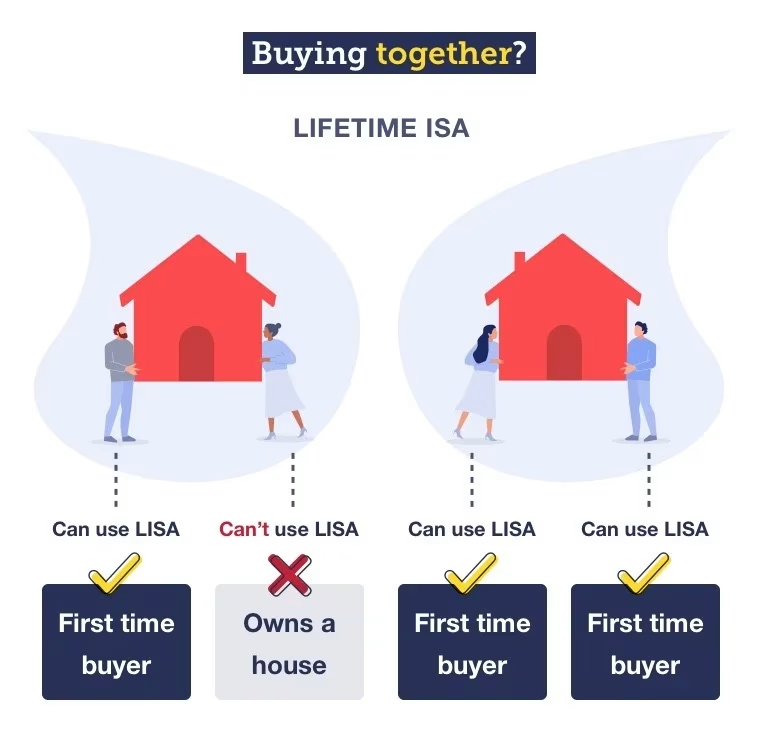
If you're planning to buy a home together, it's important to understand that there's no such thing as a joint LISA: you and your partner need to open separate ones.
Both first-time buyers? You can each use a LISA and its bonus towards the purchase. The £450,000 limit applies to the property, not per person.
Only one of you is a first-time buyer? If you're a first-time buyer making a purchase with someone who's owned before, you can still use a LISA towards a home purchase together, but the partner who's previously owned a property can't.
5. Ready to exchange? Ask your LISA provider to transfer the cash directly to your conveyancer/solicitor... NOT to you!
When you're ready to exchange contracts on your property purchase, ask your LISA provider to transfer the cash directly to your conveyancer/solicitor.
Don’t withdraw the money yourself. You'll pay a 25% withdrawal charge if you do.
The purchase needs to complete within 90 days of your solicitor receiving your LISA funds (see how buying a home works). If it looks like it'll take longer, your solicitor/conveyancer should contact your LISA provider to request an extension on the 90-day limit.
Don't worry if your purchase falls through – you won't lose out. In this case, the funds will go back to the LISA account they came from. This won't affect your annual contribution; you'll still be able to contribute up to £4,000 that tax year (unless you already have).
6. You can have a Help to Buy ISA and a Lifetime ISA at the same time, though you can't get the first-time buyers' bonus on both.
If you've got a Help to Buy ISA, you can transfer it to a Lifetime ISA, but you'll need to time it right to make it work. Martin Lewis sums up the differences between the Help to Buy ISA and the LISA in his blog: Should I move my Help to Buy ISA into a Lifetime ISA?
Or you can watch him explain the pros and cons in the video below:

From The Martin Lewis Money Show Live on Tuesday 26 November 2024, courtesy of ITV. All rights reserved. Watch the full episode on ITVX.
How Lifetime ISAs work for retirement savers
First up, you can only access your LISA funds at age 60 – so you need to be in for the long haul. Even for the oldest people who can get a LISA, that's still two decades away. The rules could be changed within that time, for good or bad – like any form of retirement savings.
-
You can access the cash from age 60. Then use it for whatever you like.
-
You don't have to take it all at once. You can make partial withdrawals.
-
If you leave cash in the LISA it will continue to get interest or investment growth/loss. The LISA doesn't simply stop at age 60; it'll still be an active product.
-
You don't pay tax on the cash. All money taken out of a LISA for retirement is tax-free.
-
LISA savings will affect your eligibility for benefits. Unlike a pension, which isn't counted as savings for means-tested benefits, the LISA will affect your eligibility for them. So you could have to pay to withdraw your LISA retirement savings and live off those until your savings are down below the means-testing threshold. Similarly, they count as assets in bankruptcy or divorce cases.
Prioritise a pension – but a LISA can still be useful to support
The LISA is designed as a way to save for retirement, much like a pension. You don’t have to choose one or the other – you can have both, and many people use a LISA alongside a pension, rather than instead of one. That said, they work in very different ways, and which suits you best depends on your circumstances.
With a pension: you save from gross (pre-tax) income. So, as a basic-rate taxpayer, saving £100 only costs you £80 from your pay packet, as that’s all you would have got.
With a LISA: you save from net (after-tax) income. So putting in £80 costs you £80, but the Government then adds a 25% bonus – meaning you again end up with £100.
While these look similar for basic-rate taxpayers, there are many other differences which can be hugely important. We've a full comparison in the table below, though here's a summary of the key differences and when each comes out on top.
Where a pension usually has the edge
-
If you’re employed, auto-enrolment means your employer contributes to your pension; they don’t contribute to a LISA. For many, this is the single biggest advantage.
-
If your employer offers salary sacrifice, you can also save on national insurance via a pension. This isn't possible with LISAs.
-
Higher- and additional-rate taxpayers get more generous tax relief through pensions than the LISA bonus.
-
Pension savings don’t count towards means-tested benefits, while LISA savings do.
-
Pensions are usually protected in bankruptcy, while LISA savings can be taken by creditors.
-
You can normally access pensions earlier (currently from age 55, rising gradually to 58), while LISAs can only be accessed penalty-free from age 60.
Where a Lifetime ISA can add something extra
-
All withdrawals from a LISA at age 60+ are tax-free, unlike pensions where most withdrawals are taxed.
-
You can access LISA savings early if needed (though you’ll pay a withdrawal penalty).
-
For some – particularly basic-rate taxpayers and the self-employed – a LISA can be a useful additional retirement pot.
A full comparison between pensions and Lifetime ISAs
The table below compares LISAs and pensions for both basic- and higher-rate taxpayers. We hope it will help you to decide whether a LISA is worth it for you (alongside a pension).
Lifetime ISA | Pension – basic-rate taxpayer | Pension – higher-rate taxpayer | |
Employer contribution | None | Yes – 3%+ of qualifying earnings (see auto-enrolment) | Yes – 3%+ of salary (see auto-enrolment) |
State contribution | 25% | 25% (20% tax relief) | 66% (40% tax relief) |
Max amount you can you save/yr? | £4,000 | £60,000 (max amount with tax relief) (1) | £60,000 (max amount with tax relief) (1) |
When is bonus/tax relief paid? | Monthly | Immediately (2) | 25% paid immediately, rest must be claimed (2) |
Who can open one? | Anyone aged 18-39 | Anyone aged 16+; parents can open one for you from birth | Anyone aged 16+; parents can open one for you from birth |
When can you access it? | Age 60 (accessible before for a penalty) | Age 55 (rising to 57 from 2028) | Age 55 (rising to 57 from 2028) |
Do I pay in from pre or post-tax income? | Post-tax income | Pre-tax income | Pre-tax income |
What tax will I pay on withdrawal? | Tax-free | 25% tax-free, rest usually taxed at your income tax rate | 25% tax-free, rest usually taxed at your income tax rate |
Liable for inheritance tax? | Yes | No (yes from April 2027 - exceptions apply) | No (yes from April 2027 - exceptions apply) |
Affects pre-pension-age benefits entitlement? | Yes | No | No |
Can be taken to pay creditors in bankruptcy? | Yes | No | No |
(1) You can carry unused allowances over from previous years, meaning that technically you could contribute up to £240,000 in the 2026/27 tax year. However, you'd need to earn at least this to get this much tax relief. (2) Unless you contribute by salary sacrifice in which case the saving's made by paying in from pre-tax income.
Top Lifetime ISAs
Before we dive in to the top picks, it's crucial to first decide whether to open a cash (savings) LISA or a stocks & shares (investment) LISA. The longer you're likely to keep the LISA, the more you should consider investing.
Should I get a cash LISA or a stocks & shares LISA?
First-time buyer? Most will want a cash LISA – your capital (the sum you put in) is safe and you get a defined amount of interest on top (plus the 25% Government bonus).
Saving for retirement? If you've 5+ years until you retire, investment LISAs will usually give much bigger returns, over the long-term. But it's important to understand when you should – and shouldn't – be considering investing. Do read our Investing for Beginners guide first.

Only invest money you won't need for at least five years, after clearing expensive debts first and building an emergency fund, and put it in a broad spread of investments.
If you do this, your investment returns should significantly outperform saving and beat inflation, though there are no guarantees.
Returns obviously depend on how well your investments do – you're taking a risk in the hope of bigger future growth. But, if you're a bit more cautious, you could open a cash LISA one year, then a shares LISA the next year (remember, you can hold more than one LISA at a time, you just can't open and pay in to more than one in the same tax year).
Top cash (savings) Lifetime ISAs
All cash LISAs listed below are fully UK-regulated & covered by the Financial Services Compensation Scheme (FSCS), which protects the first £120,000 you have saved, per UK-regulated financial institution (not per account). So in simple terms, if your bank were to fail, the FSCS aims to get any savings up to this amount back to you within seven working days.

Cash Lifetime ISAs – what we'd go for
Most of the cash ISAs below can be opened with just £1 – remember that you need to have had a LISA open with £1+ for at least a year in order to use it towards a first home, so there's wide choice for getting that clock started.
The top cash LISAs are app-only and include temporary rate bonuses, so if you go for one of them, compare the rate when the bonus ends & transfer elsewhere if it's naff.
Want the top rate? App-only Moneybox's 5% is the top-payer by a significant margin. The rate includes a 2.2% 12-month bonus, which is paid after you've held the account for a year. You'll need to pay in £100+ if you want to do a bank transfer (or £1+ via its collection cycle, though that's more of a faff). You can transfer in from other LISAs (and HTB ISAs) if you've never held a Moneybox LISA before.
Want the top rate easily openable with £1? App-only Plum's 4.47% wins here. The rate includes a 1.36% 12-month bonus and you can transfer in from other LISAs (but not HTB ISAs). If you're unsure if you'll use a LISA but plan to open one just in case – so you've got it if you need it later – this is a strong choice for getting the clock started. Or, for an account you can open & manage online, there's Paragon Bank at a much lower 3.51%.
Want to transfer a different type of ISA? If you want to transfer another type of ISA, such as a stocks & shares ISA, you'll have to sacrifice on rate considerably with Skipton Building Society at just 2.15% (min £1).
Provider (1) | Rate (AER variable) | How to open & manage | Accepts transfers? | When is interest paid? |
|---|---|---|---|---|
Moneybox | 5% | App | Yes – only if you've not had a Moneybox LISA before. | Monthly (2) |
Plum | 4.47% | App | Yes – from existing LISAs only | Monthly (2) |
Tembo | 4.45% | App | Yes – from existing LISAs only | Monthly (2) |
Paragon Bank | 3.51% | Online | Yes – from existing LISAs only | Annually |
Bath Building Society | 2.6% | Online or branch | Yes | Annually |
Skipton Building Society | 2.15% | Online | Yes | Annually |
(1) All come with £120,000 per person per institution FSCS protection. (2) Interest from the bonus portion of the rates are paid after a year.
Top stocks & shares (investment) Lifetime ISAs
There are two types of investment LISAs – which to go for will depend on how much of your own research you plan to do, how much control you want over what you invest in and how much you want to pay. We'd suggest reading our Beginners guide to investing.
-
DIY portfolios. With do-it-yourself, you must do your own research to decide what to invest in and build and maintain your own portfolio. They're the cheaper option.
-
Managed portfolios. There are two types – those that are managed by a set of real life experts, and those that are managed by an automated service (we call these 'robo'). Both types will help you to choose an investment portfolio, based on your attitude to risk and your investment goals. As they're more comprehensive, they're more expensive.
In general, managed platforms can be a good choice for beginners, as you're getting all the work done for you, though they're more expensive. In contrast, if you're an experienced investor, 'DIY' platforms give you more control and are cheaper, but there's more risk if you aren't confident in what you're putting your money into.
FSCS protection for investment LISAs works differently to the cash LISAs above – see our Savings safety guide for more info.
'Do-it-yourself' Lifetime ISAs – more suitable for experienced investors
You must research and manage your own portfolio of investments. The range varies by provider, so check what’s available before choosing.
Platform + min deposit | Management fee | Fee to buy/sell funds | Fee to buy/sell shares (1) | How to manage |
|---|---|---|---|---|
Dodl | 0.15% per year (min £1/mth) | None | None | App |
AJ Bell* | 0.25% per year (£3.50/mth max for shares) | £1.50 | £5 | Online / app |
Hargreaves Lansdown* | 0.25% per year (£45/yr max for shares) | £1.95 | £6.95 | Online / app |
(1) Fees based on up to 10 trades of UK shares per month, providers offer discounted rates for more frequent trades. You can trade overseas shares but expect to pay a currency exchange fee of up to 1%.
Managed Lifetime ISAs – more suitable for beginners
The LISAs below are likely to be more suitable if you want a simpler investment choice, as they offer funds designed for different risk profiles – though be aware they tend to charge higher fees than the 'DIY' options above, and the fund choice can be more limited.
Platform + min deposit | Management fee | Average fund costs (incl. market spread) | How to manage |
|---|---|---|---|
Moneybox | £1/mth (free for first three months) + 0.45% per year (or 0.15% for Moneybox funds) | 0.05% to 0.69% per year (0.29% for Moneybox funds) | App |
JPMorgan Personal Investing* | 0.45%-0.75%/yr | 0.18% to 0.43% per year | Online / app |
Last updated: 3 November 2026.
Is the new First Time Buyer ISA better than a LISA?
In October 2026, the Government confirmed details of the new First Time Buyer ISA. It's the latest in a series of ISA products designed to help first-time buyers to get on the property ladder by boosting their savings, though it doesn't launch till April 2029.
It’s planned to replace the Lifetime ISA as the flagship first-time buyer savings product. In simple terms, you save for a first home, the state adds a bonus when you're ready to buy, and the money can be used at exchange.
We've full details of what we know so far in our First-time Buyer ISA guide or watch Martin Lewis compare the new First Time Buyer ISA to the Lifetime ISA:

From The Martin Lewis Money Show Live on Thursday 29 October 2026, courtesy of ITV. All rights reserved. Watch the full episode on ITVX.
Lifetime ISA (LISA) | First Time Buyer (FTB) ISA | |
|---|---|---|
When can I open? | Until 5 April 2029 if aged 18–39 | From 6 April 2029 for age 18+ |
How much can I save or invest? | £4,000/yr | £4,000/yr |
How much is the bonus? | 25% paid monthly (max £1,000/yr till age 50). | 25% paid on total in account on purchase (max £20,000 bonus). |
When can I use the bonus for my first property? | Must be open for one year | Must be open for one year |
What is the property price cap | £450,000 | £450,000 |
Transfers allowed? | Can’t be transferred into FTB ISA, but can have and get bonus on both. | Will allow you to transfer Help to Buy ISA in. |
Can I use for retirement savings? | Yes, even after April 2029, even if not a first-time buyer. | No |
Penalty for unauthorised withdrawal? | 25% if not buying an eligible property as a first-time buyer or aged 60 (net loss of 6.25%). | No, you just don't get the bonus. |
Lifetime ISA FAQs
What is the maximum bonus you can earn in a LISA?
The maximum bonus is £33,000 if you open it at 18, and max it out until you hit 50 (unless you're born on 6 April, when the max is £32,000).
Can I have more than one ISA in the same tax year?
Yes, you can open and contribute to multiple different ISAs in the same tax year.
Each person has an annual ISA limit of £20,000. You put up to £4,000 into one LISA and put the remainder in cash ISAs, stocks & shares ISAs and/or innovative finance ISAs (for peer-to-peer investing) in the same tax year.
You're also allowed to hold a Help to Buy ISA and a LISA at the same time, though you can't get the first-time buyers' bonus on both. But you could get the Help to Buy ISA bonus for a home and then use the LISA and its bonuses for retirement. We've full info on the different types of ISA available.
Can I use an ISA for a self-build property?
Yes. You'll be able to put LISA savings, including the bonus, towards the purchase of the land for a self-build property, provided you still meet the other criteria (for instance, the land's in the UK, you're buying it with a mortgage, it costs £450,000 or less and you complete within 90 days of withdrawal, and that the home you intend to build is your first home and you intend to live in it).
The Treasury advises that if you're in any doubt about whether a LISA can be used, your solicitor should be able to help.
Is there a minimum mortgage amount to be able to use the LISA?
There’s no minimum mortgage set by the LISA rules, but lenders may set their own. If you can buy without a mortgage, weigh up whether the LISA bonus is worth the extra costs. You'd need to pay for a lender's valuation and legal work and the mortgage you get may have early repayment penalties (if you plan to pay off the mortgage early).
Can I keep using my LISA after I've purchased my first home?
Yes, you can keep your LISA open and continue contributing up to £4,000 a year even after using it to purchase a first home. You'll continue to receive the 25% government bonus on eligible contributions until your 50th birthday.
What happens to my LISA if I die?
If you die, any LISA money including interest and bonuses is passed on to your beneficiaries without penalty, though it'll no longer be in an ISA 'wrapper', and will form part of the estate for inheritance tax purposes.
Share this guide?