





Warm Homes Loan: Cheap or interest-free finance for solar panels, batteries and heat pumps
How the new Government scheme works & the cheapest options we’ve found so far

The Government’s Warm Homes Loan Scheme, launched in October, aims to make it cheaper to borrow for energy‑saving home upgrades. It gives access to subsidised loans for solar panels, batteries, heat pumps and more. Some lenders offer interest‑free borrowing, making it a good way to spread costs if you were already planning the work. This guide explains how it works, highlights the most competitive finance so far, and outlines the key checks before borrowing.
This is the first incarnation of this guide. We'd love to know your thoughts on Warm Homes Loans, or if you've any feedback or questions we've not answered. Let us know in the Warm Homes Loan forum thread.
What is a Warm Homes Loan?
The Government subsidises participating lenders so they can offer lower interest rates on borrowing for energy‑saving home improvements. It gives lenders funding worth up to 20% of the loan – equivalent to up to five percentage points off the interest rate. That means some can offer 0% borrowing, while others offer lower rates than you might get with a standard personal loan.
You can use a Warm Homes Loan for solar panels, home batteries, heat pumps, biomass boilers, heat‑network connections and other small‑scale renewable systems. You can also include an EV charger, but only as part of a solar‑panel or home‑battery installation.
Maximum loan amounts vary by what you are having installed, from £7,500 for a heat-network connection to £35,000 for a ground-source heat pump (see our What can you borrow for? list below).
Importantly, this is a loan from the lender, not a Government grant. You’ll need to pass the lender's credit and affordability checks and repay every penny you borrow. Lower repayments under the scheme could help you meet a lender’s affordability test, but the Government subsidy doesn’t guarantee acceptance or mean a lender will relax its usual lending criteria.
Who can get one?
The scheme is available across the UK. To qualify, you need to:
-
Be an owner-occupier of a domestic property, or a private rented-sector landlord. Tenants, social landlords and business borrowers are not covered.
-
Pass the lender’s creditworthiness and affordability checks. There is no scheme-wide income, benefits, EPC or property-type test – though lenders can add their own rules and carry out hard credit checks.
-
Borrow for an eligible installation. These include solar PV, battery storage, ground source and air-to-water heat pumps, rural biomass boilers, heat‑network connections, and domestic wind or micro‑hydro systems.
-
Use an MCS-certified installer. For all eligible installations except heat-network connections, you’ll need to use an installer certified under the MCS scheme. You can find one using the MCS installer directory. But check with the lender before choosing one, as not every lender will work with every MCS-certified installer.
Will a Warm Homes Loan application affect my credit file?
Some lenders offer an eligibility check before you make a full application. This may be a simple scheme check or a soft credit search, neither of which affects your credit score.
When you complete your application, lenders usually carry out a soft search, though this does vary. For example, Propensio told us it only carries out soft credit searches during the application process, while The Money Co‑op says it may use either a soft or hard search during its loan assessment, depending on the application.
Other lenders are vague about the type of search they use, so always ask before applying whether it involves a hard credit check, which will leave a mark on your credit file. See our credit scores guide for more info.
What can you borrow for?
You can use a Warm Homes Loan for one or more eligible clean-energy upgrades. The maximums below are the amount the scheme can support, not a guarantee of what you'll be offered as lenders still carry out their own credit and affordability checks. There's no scheme minimum you can borrow, and you can part-fund products upfront, though individual lenders may have their own rules about minimum borrowing thresholds you have to hit.
What you want to install | Maximum loan | Useful to know |
|---|---|---|
Solar panels | £15,000 | Panels that generate electricity for your home. See our solar panels guide for more info. |
Home battery | £15,000 | Stores electricity for later use – typically solar power, or cheaper overnight electricity on a time-of-use tariff. See our solar battery guide for more info. |
EV charger | Part of solar or battery installation | Charges your electric vehicle at home. See our electric vehicles guide for more info. |
Air-to-water heat pump | £20,000 | Takes heat from outside to warm radiators, underfloor heating and a hot-water cylinder. Can be combined with heat pump grants. |
Air-to-air heat pump | £10,000 | Blows warm air into rooms rather than heating water for radiators. This loan will become available once MCS certification is in place for UK installers. Can be combined with heat pump grants. |
Ground-source heat pump | £35,000 | Draws heat from the ground, usually via buried garden pipes or a borehole, to heat your home and water. Can be combined with heat pump grants. |
Biomass boiler (1) | £20,000 | A boiler fuelled by organic material, such as wood pellets or chips, rather than gas or oil. |
Heat-network connection | £7,500 | Helps cover the cost of connecting to a shared heating system that supplies heat, and sometimes hot water, through pipes. |
Micro-renewable system | £20,000 | Small-scale renewable electricity generation, such as a domestic wind turbine or micro-hydro system. Solar panels and batteries have separate limits. |
(1) You can only use a Warm Homes Loan for a biomass boiler if you live in a rural property and are receiving an applicable Boiler Upgrade Scheme grant (or equivalent devolved-nation grant).
Is a Warm Homes Loan worth considering?
Yes, but only if you were planning to do this anyway – or would’ve done it if it wasn’t for the cost of financing it. If this lets you borrow, especially at interest‑free, and the savings on your energy bills should cover it over time, then it can be worthwhile. Yet you still need to make sure you pick the right lender, cost it properly and budget for it.
Even the standard cheapest personal loans for borrowing at these amounts are currently over 6% (and that’s only if you’ve a good credit and affordability score), so Warm Homes Loans can substantially undercut them. But don't judge a deal on the APR alone. There are two big questions to ask:
-
Is the installation price competitive? A 0% loan for a pricey solar installation could cost more overall than borrowing at a low rate from a lender that lets you use an installer charging substantially less. See The Money Co-op example below.
Get at least three comparable quotes before committing, and make sure any expected energy bill savings are realistic.
2. Do you have to use a particular installer? Some providers arrange both the finance and installation. This is convenient, but means you can't necessarily take the finance to whichever MCS-certified installer gives you the best quote. At the time of the scheme's launch, The Money Co-op is the only lender that lets you use any MCS-certified installer.
Two providers currently offer interest-free options
Sunsave and E.ON are the only Warm Homes Loan providers confirmed to be offering 0% borrowing. Sunsave is an MCS-certified installer AND lender (via Sunsave Energy Ltd), so it effectively deals with both the installation and loan in-house. E.ON, meanwhile, is a broker that arranges the installation and finance, but is not the lender. It works exclusively with HomeServe Finance, which provides the loan.
There’s an important trade‑off with both. To get their 0% loans, you need to use their installation route, as well as pass the usual credit and affordability checks and meet the scheme’s eligibility rules. In other words, these aren’t standalone 0% loans you can take to whichever installer offers the cheapest quote.
The Money Co‑op doesn’t offer 0% borrowing, but it’s included below because it charges a low 2.7% APR and it lets you use a quote from your preferred MCS‑certified installer. That could mean a lower overall installation price, though its borrowing itself costs more than 0% finance.
For example, say you got a 0% loan from E.ON or Sunsave for a £7,000 solar installation, repayable over five years. If you went with The Money Co-op instead, an installer would need to charge about £500 less for the same installation for the saving to outweigh the interest on its 2.7% loan.
UPDATE 10 November, 2026: The Money Co‑op has paused new applications due to the high number already received. If you’re interested, you can register your interest here.
Provider | What you can finance | Interest rate (& length of loan) |
|---|---|---|
Solar panels and batteries | 0% rep APR (three years) | 3.2% rep APR (10 years) | 8.9% rep APR (20 years) | |
Solar panels and batteries | 0% rep APR (one, two, three or five years) | 4.6% rep APR (six to 10 years) | |
Air-to-water heat pumps | 0% rep APR (three or six years) | 4.6% rep APR (seven to 10 years) | |
The Money Co-op (1) | Solar panels, batteries, air-to-water and ground-source heat pumps, biomass boilers, heat-network connections and micro-renewable systems | 2.7% APR (three to seven years) |
How does E.on’s solar-panel price stack up?
When we checked, E.ON quoted £6,895 for a six-panel 2.9kW solar system with a 5.1kWh battery. That appeared competitive with the wider market, but it is not a substitute for getting comparable quotes for the same specification.
What other lenders are offering
Other lenders are participating in the scheme, but their rates aren’t as cheap and application routes can also be less straightforward, as some are available only through particular installers or retailers.
Lenders that have loans under 4% APR: South Manchester Credit Union (3.6% APR on loans from £7,000 to £15,000)
Lenders that have loans under 6% APR: Hometree Finance (from 4.6% APR) | Propensio (from 4.6% APR) | Tandem Bank (from 4.6% APR) | This Bank (from 4.6% APR).
Lenders that offer secured loans: Selina Finance (from 1.39% APR), up to £995 product fee. See our warning about secured loans.
Some lenders MAY be able to offer 0% through an installer or retailer. Tandem told us that a participating installer or retailer could add its own subsidy to bring the interest rate down to 0% on selected shorter-term loans. Secure Trust Bank/V12 says rates are set through participating retailers, so these could also potentially include 0% deals.
We asked both for details of installers or retailers currently offering 0%, but neither could provide any, so we haven’t included them among the main 0% options above (though you can check V12's list of participating installers in the V12 app). If you already have a preferred installer, ask if it offers Warm Homes Loan finance and whether it has a 0% option. As with any deal tied to an installer, compare its quote with others first.
Looking at other ways to borrow?
See our best personal loans guide for the latest top rates, and use our Loans Eligibility Calculator to check which loans you’re likely to be accepted for before applying. You can also look into green mortgages, some of which let you get 0% loans for domestic energy-efficiency measures. These loans, however, are secured against your home.
Only one of the initial Warm Homes Loans lenders, Selina Finance, offers secured loans for your upgrades, but more are likely to appear in the future, so it's important to know what you're signing up for.
With a secured loan, your home is used as collateral, so it could be at risk of repossession if you do not keep up repayments. An unsecured loan does not use your home as security, though missed payments can still harm your credit record and lead to debt collection action. Secured loans may allow you to borrow more or repay over longer, but make sure you understand the risk before signing.
Considering a Warm Homes Loan? What to do next...
If you have decided a Warm Homes Loan is right for you, here are the key steps to follow to get the best deal:
Step 1. Work out what you want to install
Start with the problem you are trying to solve. For example, you might be looking at solar panels to generate electricity or save money on your energy bills, a solar battery to store cheaper power, or a heat pump to replace an existing heating system.
Check what the installation involves, whether it is suitable for your home and whether any grant could reduce the amount you need to pay. For heat pumps and biomass boilers, see whether you could use a Boiler Upgrade Scheme grant first.

Step 2. Find good-value installers and get comparable quotes
For solar panels, use our solar panels guide and the Federation of Master Builders quote tool to find cheap installation quotes. For heat pumps, see our heat pumps guide for help finding a good-value installer.
Get quotes for the same job from at least three suitable installers and get them in writing. Make sure you are comparing like for like: the equipment and specification, installation work, warranties or guarantees, any extras, and the total price. Also make sure to ask installers if they offer Warm Homes Loan financing, which lenders they work with, and what APRs they offer.
Step 3. Find a finance route that works for you
You don’t apply to the Government for a Warm Homes Loan. Instead, the route depends on whether you want 0% borrowing or the freedom to choose your own installer.
-
Want 0% borrowing? Start with Sunsave or E.ON. Both arrange the finance and installation, but you need to use their installation route to get the 0% deal. Get a quote from them, then compare it with outside quotes for a comparable system.
-
Want to choose your own installer? Get an itemised quote from a suitable MCS-certified installer first. The Money Co-op route works this way, though applications are currently paused. You can register your interest here.
-
Already have an installer in mind? Ask whether it offers Warm Homes Loan finance, which lender provides it, and whether you can use that finance for your chosen installation. Check the rate, term, fees and total amount repayable before agreeing to any work.
Step 4. Work out how much you need to finance
Once you have your quotes, decide how much you want to borrow after any grant and money you are paying upfront. Check the monthly repayments, loan term and total amount repayable – not just the interest rate.
You will still need to pass the lender’s credit and affordability checks before it agrees to lend.
What protections do you have if something goes wrong – and what should you check?
This is a new market, so it’s important to understand what is – and isn’t – protected. The Government helps cut the interest rate, but it doesn’t provide or underwrite the loan, or guarantee the installation, only that lenders meet the requirements of the scheme. Before signing, check:
-
Who is providing the finance? The firm arranging the work isn’t always the lender. For example, E.ON arranges the finance and installation, but HomeServe Finance makes the lending decision, provides the credit agreement and handles repayments and finance complaints. That means you are effectively dealing with two companies – one for the installation and another for the loan.
-
Who is responsible if installation work is incomplete or defective? A Warm Homes Loan doesn’t itself guarantee the work. For domestic MCS installations, installers must arrange financial protection in case work is faulty or incomplete, or the installer goes bust. Before signing, ask for the certificate and check who provides the protection, what it covers and how to claim. You also retain your usual legal consumer rights.
-
What happens if the installer or lender fails? Your loan won't automatically disappear, and you'll normally still need to repay what you owe under the existing contract. Check your loan agreement for what would happen in this situation.
-
Whether you have Section 75 protection. This will depend on how the installation and finance are structured, so ask the lender or provider before signing. See Section 75 refunds for how this protection works.
-
Whether the loan is secured. Selina Finance offers secured loans for upgrades, and other secured options may follow. With a secured loan, your home is used as collateral and could be at risk of repossession if you do not keep up repayments. An unsecured loan does not use your home as security, though missed payments can still harm your credit record and lead to debt-collection action.
We’re continuing to investigate these protections, including how participating lenders and installers are vetted, and will update this guide as we establish more.
You may be able to combine a Warm Homes Loan with a heat-pump grant
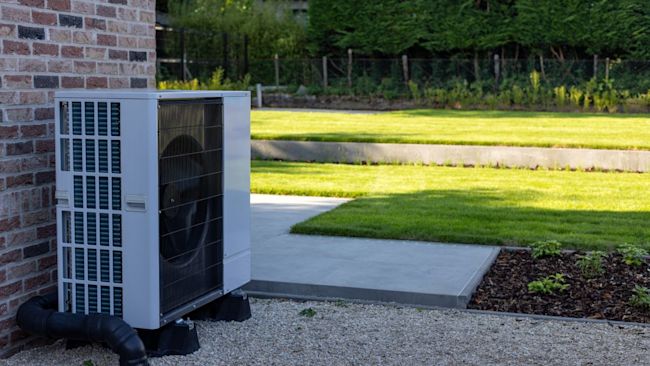
If you’re using a Warm Homes Loan to install a heat pump or biomass boiler, you may also be able to get help through the Boiler Upgrade Scheme (BUS).
It’s not one or the other. You can use a BUS grant to reduce the upfront cost, then use a Warm Homes Loan to help cover some or all of the amount left to pay.
For example, if an eligible heat-pump installation costs £18,000 and you qualify for a £7,500 BUS grant, that could leave £10,500 to pay. You may be able to use a Warm Homes Loan towards this remaining cost, subject to the lender’s checks and scheme limits.
As usual, beware the scammers
New government-backed schemes can attract scammers. Be wary of unexpected calls, texts, emails or social-media messages claiming they can guarantee you a Warm Homes Loan, get you 0% finance, or “reserve your place”.
You don’t apply to the Government for a loan. Applications are made through participating lenders, or sometimes via an installer or retailer. Always find contact details yourself through the lender or installer’s official website, and check financial firms on the FCA’s Firm Checker.
Don’t be rushed into making an upfront “deposit”, “admin fee” or “insurance” payment after an unsolicited approach.
Share this guide?