





First Time Buyer ISAs - what’s been proposed so far
These ISAs are proposed to replace the Lifetime ISA

In June 2026, the Government announced proposals for a new First Time Buyer ISA. It's the latest in a series of ISA products designed to help first-time buyers to get on the property ladder by boosting their savings. This guide details what we know so far, and – crucially – what's yet to be decided.
It’s planned to replace the Lifetime ISA as the flagship first-time buyer savings product. In simple terms, this looks a bit like a Help to Buy ISA 2.0: you save for a first home, the state adds a bonus when you're ready to buy a home, and the money can be used at exchange.
But unlike the old Help to Buy ISA, it should allow lump sums; unlike the Lifetime ISA, there’s no withdrawal penalty; and, unlike both, some of the key numbers still haven’t been announced: the big known unknowns are the bonus rate, the annual savings limit, and – a biggie – the property price cap.
Here's what's been proposed for the First Time Buyer ISA (and as it's "proposed" rather than final, take it all with a pinch of salt for now)...
-
You need to be a genuine first-time buyer aged 18 or over to open a First Time Buyer ISA – but there's no upper age limit
If the FTB ISA follows the Lifetime ISA's definition of a first-time buyer, that'll mean you must have NEVER owned a property anywhere in the world. Not in the UK, not overseas, not a share of one, and not one you inherited then sold straightaway.
The key difference from the Lifetime ISA is there’s no upper age limit. With a LISA, you have to be under 40 to open it and must stop paying in once you turn 50. With the First Time Buyer ISA, there’s no upper age cap to open it or save into it.
-
You get a bonus on the total amount saved - but we don't know the bonus rate, or the annual savings limit!
Like the Help to Buy ISA and Lifetime ISA before it, the First Time Buyer ISA will come with a Government bonus.
Yet the Government still hasn’t told us the two key numbers:
-
how much you’ll be able to save in it each year; and,
-
what percentage bonus it’ll pay.
Both are due to be announced at a "future fiscal event" – that's Government-speak for a Budget or Spring Statement.
What we do know is the bonus will only be paid on your net contributions. That’s what you’ve paid in, minus anything you’ve withdrawn.
That also means you won’t get the bonus on interest or investment growth. And unlike with the Lifetime ISA, the bonus isn’t sitting in the account growing too. So there’s less compound gain – the state boost comes at the point of buying, not along the way.
-
-
You must be buying a residential UK property to live in - but we don't know the upper property price yet
To get the bonus, you’ll need to buy a qualifying UK residential property that you’re going to live in.
You’ll also need to be buying with a residential mortgage. So you can’t be a cash buyer, and it can’t be a buy-to-let mortgage.
But, the big practical question is the property price cap. One of the major problems with the Lifetime ISA is its £450,000 cap, which has left many unable to use it in more expensive parts of the country.
The Government says the First Time Buyer ISA property cap will be announced later. It has also said that once it is, the LISA and Help to Buy ISA upper limits will be aligned to the same level.
On this, Martin Lewis, founder and chair of MoneySavingExpert, said: "In my view this means the new property cap limit must be £450,000 or above. It would be unthinkable (and political suicide) to screw young people over by lowering the Lifetime ISA cap when they've already put money in."
Another unknown is whether the cap will rise with house prices. Our view: it should - and we'll be lobbying hard on this.
-
Each person has their own FTB ISA, so couples can have one each
There’s no such thing as a joint First Time Buyer ISA. Each person has their own.
So if two first-time buyers are buying together, both can have one and both can get the bonus – effectively doubling the help.
If you’re a first-time buyer buying with someone who has owned before, you can still use your First Time Buyer ISA towards the purchase. They just can’t have one.
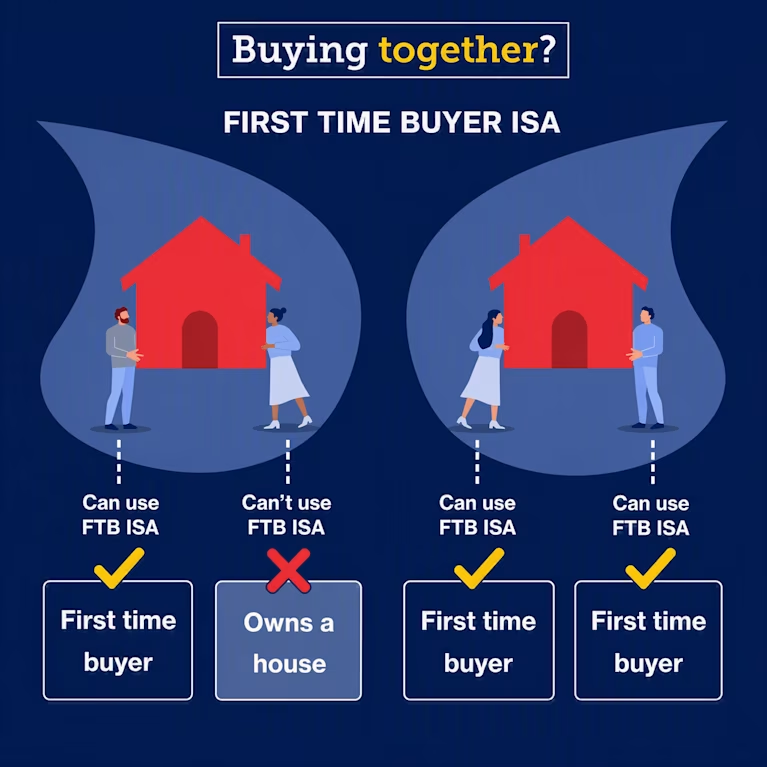
But the property price cap won’t double just because two people are using First Time Buyer ISAs. The cap applies to the property, not the person/people.
-
The bonus will be paid at exchange when you buy a qualifying property
The Lifetime ISA pays the bonus into the account monthly, which means if you take money out for anything other than a qualifying home or age 60+ (in other words, using the LISA cash for something other than what it was designed for), there has to be a withdrawal charge to claw it back – and that charge is set artificially high so it takes some of your own savings too.
The Help to Buy ISA had the opposite problem: the bonus was paid at completion, when buyers usually needed the money earlier, at exchange.
The First Time Buyer ISA aims to fix that. The bonus will be paid at exchange, when you’re properly committed to the purchase and when the cash is useful.
Yet, it does mean that – unlike with the Lifetime ISA – you won't be able to get interest or investment growth on the bonus (because it'll never be in your account until you use the savings). This is a point we'll be lobbying on when we reply to the consultation on these proposals.
How you'll claim the bonus
When you come to buy a property, your conveyancer will need to make the withdrawal of your balance from the FTB ISA, and also claim the bonus. That’s admin, so expect a fee, likely around £50+VAT. They’ll submit the declaration to your ISA provider, the provider claims the bonus from HMRC, then the full amount is transferred to the conveyancer ready for exchange.
If the purchase falls through after the bonus has been claimed, the conveyancer has 90 days to return the money to the original account. The provider returns the bonus to HMRC, and you should still be able to claim the bonus again on a later qualifying purchase.
-
You need to have a First Time Buyer ISA open for a year or more to be able to use it for a home
If it’s been open for less than a year, you can still withdraw your own money and use it towards a deposit, but you won’t get the Government top-up.
This mirrors the Lifetime ISA rule and is there to stop people who are already about to buy just flipping cash in and immediately grabbing taxpayer-funded bonus money.
Likely tip once accounts launch: open one early with £1 to start the clock. But we’ll need the final rules (and have some providers launch accounts!) before saying that firmly.
-
You'll be able to choose a cash FTB ISA or a stocks and shares FTB ISA
As with the Lifetime ISA, you’ll be able to choose whether to save in cash or invest through a stocks and shares version, assuming providers offer both.
Either way, what you pay in counts towards your annual ISA allowance.
If you’re under 65 and choose a cash First Time Buyer ISA, it’ll count towards the new £12,000 annual cash ISA limit due from 2027. If you’re 65 or over, cash First Time Buyer ISA contributions will count towards your £20,000 cash ISA allowance.
If you choose a stocks and shares First Time Buyer ISA, it counts towards your overall £20,000 annual ISA allowance.
-
You'll be able to transfer between FTB ISA providers to get a better deal
It's likely you'll be able to transfer between providers if you spot a better deal, so you'd be able to open a cash FTB ISA with one provider, then transfer it later to another provider, for example if the second provider has a better rate. The same's likely with stocks & shares FTB ISAs.
That depends on providers accepting transfers in. It won’t be compulsory, but in practice many are likely to do so as they’ll want savers’ money.
However, the Government's banning stocks & shares ISA transfers to cash ISAs from April 2027, and this will be the same for the First Time Buyer ISA. You won't be able to transfer from stocks & shares to cash, though you will be able to transfer the other way around.
-
If you have a Help to Buy ISA, you'll be able to transfer it to a FTB ISA – but you won't be able to transfer a LISA
Help to Buy ISA money will be transferable into a First Time Buyer ISA. That’s because a Help to Buy ISA only holds your savings and interest; the bonus isn’t added until you buy. So it’s relatively clean to transfer across.
A Lifetime ISA is different. The Government bonus has already been paid into it, so you won’t be able to transfer a LISA into a First Time Buyer ISA and then claim another bonus on the same money when you buy a home.
Yet, if you have a LISA, you will be able to use both it AND a FTB ISA towards a home...
... let's say you've saved £20,000 (incl bonuses) in your LISA, and then you choose the FTB ISA and save a further £10,000 in that before you buy a property. You'll be able to use the £30,000 - plus the as yet unknown FTB ISA bonus amount - towards the property purchase... assuming you're buying a qualifying property.
The catch: once the First Time Buyer ISA launches, you’ll need to choose between paying into a LISA or a First Time Buyer ISA in the same tax year. You won’t be able to pay into both.
-
You'll be able to withdraw cash from your FTB ISA without penalty

An improvement from the Lifetime ISA in that you won't need to lose 6.25% of your own money if life happens and you need to withdraw cash from the account (find out more about the Lifetime ISA penalty).
With the FTB ISA, you'll be able to access all your own money (plus any interest or investment growth) without paying an explicit penalty.
However, there's an implicit penalty baked in here... the bonus is paid on net contributions. Which means that if you do withdraw money from the FTB ISA, you'll get less bonus. An example should help explain...
Let's imagine you've saved £30,000 in to the FTB ISA, and you've also got £5,000 worth of interest in the account. Let's also imagine your car breaks down and you need to replace it. You take £5,000 from the FTB ISA to cover it. A few weeks later (go with us here...) you exchange on your first home.
Instead of getting the bonus on the £30,000, you'll only get the bonus on £25,000 (remember that you don't get bonus on interest or investment growth in any scenario).
So, even with the FTB ISA, you are discouraged from using the cash for anything other than a first home. It's a point we'll be highlighting when we respond to the consultation on these proposals.
-
It's likely the FTB ISA will launch in April 2027
The plans are out for consultation until August 2026. After that, the Government will publish the final rules, and banks, building societies and investment platforms will need to decide whether to offer FTB ISAs.
April 2027 looks the likely launch date, but we genuinely don’t know yet. And as ever with Government policy, especially proposals still at consultation stage, things can change.
It may also be a slow start. Some providers, especially those on older systems, may struggle to be ready straight away, so there could be limited choice at first, with more joining later.

Share this guide?