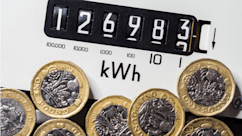


Meter reading week: 9 need-to-knows

On 1 October energy prices rose by 3.6% for most households. To avoid being charged more than you should, it's a good idea to give a meter reading to your supplier as soon as possible to avoid a dispute over what you used before and after prices changed. Even if you're on a fixed tariff, it may be worth doing so, as VAT on electricity bills has been cut until 1 April 2027. You can still submit a reading a few days after, and some firms allow you to submit backdated readings after 1 October. We've a full supplier-by-supplier breakdown below.
-
Why it's worth considering giving a meter reading
If, like about 60% of households, you're on a standard variable tariff, the price you pay is controlled by the energy Price Cap, which rose by 3.6% on 1 October. The hike is largely driven by the ongoing crisis in the Middle East.
To make sure there are no discrepancies in the amount you're charged on the new higher rate, it's a good idea to give a meter reading to your supplier on or around 1 October. This stops your supplier from estimating your usage, and potentially assuming you've used more at the new higher rate than you actually have.
There will be winners and losers here – as some will gain and others lose against what their supplier would have estimated – but if you do a meter reading, you know it's fair.
If you're on a fixed tariff, it may also be worth submitting a meter reading, as the Government has cut VAT on electricity bills for six months from 1 October, which could affect what you pay.
-
If you have working smart meters, you don't need to do anything
If you have smart meters that are working properly in smart mode, so they're regularly sending meter readings to your provider, there's no need to do anything, as they do it automatically.
You may want to double-check your meters are sending reads, though. You can usually see this in your account or on your bill. You can also take a photo of your meters on the day, so you have the readings for safety.
-
If you don't have smart meters, it's a good idea to give meter readings SOON
Giving a meter reading means your supplier will know exactly how much you used when prices change, so you're fairly charged.
Yet if all of us rush to do this on the same day, it can lead to suppliers' websites crashing and phone lines becoming jammed, which can affect vulnerable people (as we saw in March 2022).
To avoid that, you can give a reading a few days before or after and any discrepancy should be minor. Or, some firms let you backdate your reading, so if you take the actual meter reading on the day, note it down, but then submit it at a later date.
When to give a meter reading for October Price Cap changeSupplier
How can I give a meter reading?
Will it backdate meter readings after 1 October?
British Gas
In your online account, via its app, a web form or over the phone on 0330 054 5340 (24 hours a day).
Yes, until 14 October
EDF Energy
In your online account, via its app, via an online form, or by email, WhatsApp, text or over the phone.
Yes, until 9 October
E.on Next
In your online account, via its app, by email or over the phone.
Yes, until 6 October
Octopus Energy
In your online account, via its web form, its app or by email.
Yes, until 8 October
Ovo Energy
In your online account, via its app or over the phone.
Yes, until 11 October
Scottish Power
In your online account, via its app or over the phone (0800 027 8000), 24 hours a day.
Yes, until 5 October
So Energy
In your online account, by email or over the phone, 24 hours a day.
Yes, if you have proof of the date you took the reading
Utility Warehouse
In your online account, via its app or over the phone.
The supplier is encouraging customers to give meter readings in the five days leading up to 1 October
Updated 25 September 2026.
-
How to give a meter reading
The easiest way is to take a picture of your meters, so you have the readings to hand. Then you can log in to your online account and enter the readings.
Most also let you send readings via text message, or through mobile apps such as WhatsApp. You can also call them up – most have automated telephone lines where you can give the readings, to save you joining a queue or clogging up the lines for those who need help.
-
Some ask: 'Can I give a higher meter reading now, so I'm charged for more use at the current lower rate?'
No, that'd be fraud. We get asked this one a lot – can you submit a higher meter reading ahead of a price rise, so more of your usage is charged at the current lower rate?
The short answer is no, you shouldn't do this – it's fraud. -
On a (non-smart) traditional electricity prepayment meter? Top up as much as you can BEFORE the Price Cap changes to delay paying the new higher rates
With most prepayment meters – both smart meters and all gas meters – you pay the rate on the day you use energy. Yet with many non-smart, prepay electricity meters, you pay the rate on the day you top up.
If you can, top up as much as you can before a Price Cap change (the next one is 1 January) to delay triggering the new higher rates.
-
Check your Direct Debit is right under October's Price Cap rates
If you're on a price-capped standard tariff – and about 60% in England, Scotland and Wales are – then you should check if your Direct Debit amount is along the right lines based on the new October rates.
If you're heavily in credit, then before asking your supplier to lower the Direct Debit, try to get back a chunk of the amount you've overpaid. Though remember, you should have a decent amount of credit on your account at this time of year.
-
Current Price Cap unit rates and standing charges
The Price Cap sets a limit on the rates and standing charges you pay. For a full region-by-region breakdown of the rates you pay on the October Cap, see our Energy Price Cap rates guide.
The table below shows the average unit rates per kilowatt hour (kWh) and standing charges per day (these vary by region) under both the current and previous Price Cap.
Average Standing Charges and unit rates from 1 October 2026 if you pay by Direct DebitCurrent Price Cap rates (1 October to 31 December 2026)
Previous Price Cap rates (1 July to 30 September 2026)
Gas
Unit rate: 7.97p/kWh – up 8.7%
Standing Charge: 29.68p per day – up 2.2%
Unit rate: 7.33p/kWh
Standing Charge: 29.04p per day
Electricity
Unit rate: 26.32p/kWh – up 0.8%
Standing Charge: 54.83p per day – down 4.1%
Unit rate: 26.11p/kWh
Standing Charge: 57.19p per day
Rates and Standing Charges are averages, which vary by region. Assumes payment by Direct Debit and includes VAT (at 5%) for gas only. For those who pay each month after getting a bill, it's 8% higher, on average. If you prepay for your energy, it's 3% cheaper, on average.
-
You can still fix for less than October's Price Cap
With the Price Cap up by 3.6% due to the conflict in the Middle East – and predicted to rise by over 20% in January – it could be worth fixing now.
You can use our Cheap Energy Club to ensure you're on the cheapest deal possible, based on where you live and how much energy you use. The current cheapest fixes are slightly cheaper than the October Price Cap.
You can undercut the Price Cap with British Gas Cap Tracker Plus tariff which tracks the Price Cap, with a fixed discount on standing charges – good for lower energy users – meaning everyone who joins this tariff on dual-fuel will save £60 (£30 for single-fuel) over the next 12 months.
Existing Octopus customers could consider its Octopus Tracker tariff (if you're not already with Octopus, you can try switching to its standard variable tariff, then switch to this). Its rates change daily based on wholesale costs though, and due to the Middle East crisis, it's been more expensive than the Cap recently. But if and when that falls, lower prices will feed through quicker.
Alternatively, Octopus' electricity-only Agile tariff has rates that change half-hourly, based on wholesale prices – good for those who can shift their electricity use out of peak hours.If you're still on the Price Cap, our Cheap Energy Club comparison will give you a bespoke prediction of what it'll cost you over the next year, so you can compare that with fixing.
Share this guide?