
Solar panels – are they worth it?
How much can you really save?

Nearly 2 million homes across the UK now have solar panels. As well as saving you money on energy bills, solar panels can earn you cash. And don't worry, they can still generate electricity on gloomy days, vital when the weather's as dull as dishwater. But they cost an average of £7,600, so you need to understand how to work out if the sums add up.

A quick overview of solar panels – key need-to-knows and how to buy
Whether you're looking to save on electricity bills, generate your own energy, reduce your carbon footprint, or all of the above, there's a lot to consider when getting solar panels installed. Here, we've a brief summary and quick links to get you started. Or read the full guide below for detailed info.
Solar panels could help you save £100s a year on your electricity bills. Using the energy you generate can mean big savings for some households.
You can get paid to export electricity you generate but don't use through the Smart Export Guarantee (SEG).
Hefty upfront costs mean it could take 10 years to break even. Try the Energy Saving Trust calculator to get an estimate of how long it'll take to recoup costs.
Ready to buy? Find installers and get quotes. Make sure to find a reputable, certified installer and aim to get at least three quotes. There's a handy tool from the Federation of Master Builders to help you find installers it has vetted, and right now you can get £550 off installation costs. Alternatively, you can check offers from energy suppliers or find your own.
This guide doesn't constitute legal advice tailored to your individual circumstances. If you act on it, you do so at your own risk. Thanks to trade association Solar Energy UK, and solar specialists GB Solar and The Eco Experts, for their feedback on this guide.
How do solar panels work?

Put simply, solar panels turn the sun's energy into usable electricity. Solar panels – also known as photovoltaics (PV) – contain electrons, which start moving when hit with direct sunlight. The moving electrons create an electric current, kind of like a stream of energy, which is then channelled and turned into usable electricity.
The electricity is then sent out of the solar panel through wires, ready to power your gadgets, lights or even your electric vehicle, or it can be sent back to the grid, with suppliers paying you for that energy.
What are the benefits of solar panels?
Solar panels do give a number of benefits – some are fairly obvious, but there are others you may not have thought of:
-
Lower energy bills. Producing your own electricity to power your home and your vehicles means you can reduce the amount you take from the grid – which right now is extremely costly. To maximise savings, you can also invest in a solar battery as well.
-
Get paid for any electricity you generate but don't use. You can get financial incentives from the UK Government under the smart export guarantee, which pays homeowners for excess electricity they generate and feed back to the grid.
-
Solar power is clean and green. You're producing electricity without emitting harmful greenhouse gases, helping to lower your (and the UK's) carbon footprint.
-
Low maintenance. Solar panels have minimal moving parts so require little maintenance. Routine cleaning and occasional checks are usually enough to keep your system running efficiently.
-
They could increase your property value. Homes with solar panels can sell for more than those without, as potential buyers are attracted by the savings and eco-friendliness. Though some say that the increase in property value doesn't outweigh the cost of installation.
Yet while there are a number of benefits to getting solar panels, it doesn't mean you should rush out to get them. Always check the maths first, to make sure you can recoup the cost of getting them installed.
What are PV solar panels made of?
There are many different types of solar panels, but the two most commonly used in the UK are monocrystalline and polycrystalline solar panels.
-
'Monocrystalline' panels are the more expensive option (they'll cost you about 20% more than polycrystalline according to The Eco Experts), but are the most efficient for domestic households.
-
'Polycrystalline' solar panels are cheaper but they're about one-third less efficient than monocrystalline panels, meaning you'll need to have more panels on your roof to achieve the same power output.
How many solar panels do I need?
Generally speaking, the more electricity your home uses, the more solar panels you'll need. Naturally, larger homes typically require larger solar panel systems. According to The Eco Experts, the number needed ranges from between three and six panels for a small home with low consumption, all the way up to at least 14 solar panels on the other end of the scale.
That said, the number of solar panels you require will also depend on factors such as:
-
Your available roof space. Ultimately, the size of your roof will determine how many solar panels can be physically installed.
-
The efficiency of your solar panels. The more efficient solar panels you choose, the fewer you'll likely need.
-
How much sunlight your home gets. The less sunlight your home receives, the less efficient your solar panels are and the more you'll require as a result. This is not only affected by climate, but shade caused by trees, buildings and so on. Unfortunately, some properties are just not suitable for solar panels.
-
Your budget. Of course, your finances will also influence the number of panels you can install. More on solar panel costs below.
Solar panel jargon explained
If you're looking to get solar panels, you'll likely come across lots of unfamiliar terms. To help, we've explained some of the key terms you might hear...
Solar panels jargon buster
-
AC or Alternating Current. This is the type of electricity we use in our homes.
-
DC or Direct Current. Your solar panels generate Direct Current (DC) electricity. But our homes use Alternating Current (AC). Therefore, DC needs to be converted into AC so we can use it.
-
Inverter. Every solar panel system uses an inverter to convert DC energy into AC energy, to use within the home.
-
kWh or kilowatt-hour. A kWh is a unit of measurement used to identify the amount of electricity used in a home. There are 1000 watts in one kWh. As an example, if you switched on a 100w light bulb, it would take ten hours to use one kWh.
-
kWp or Kilowatt-peak. A unit of measurement used to describe the maximum amount of power that your solar panel system can generate when exposed to optimal sunlight and other ideal conditions. The average domestic solar panel system in the UK is around 3.5 kilowatt peak (kWp).
-
Pitch. This is the angle at which your roof faces the sun. According to the Energy Saving Trust, the best angle for solar panels in the UK is somewhere between 30° and 40°. However, this varies depending on where in the UK you live.
-
Export. This is the process of sending excess electricity generated by your solar panel system back to the grid. If your solar PV array is generating 5kWh of energy and only 2kWh are being used to power your home, your system could export 3kWh to the grid.
-
Import. This to the process of obtaining electricity from an external source, such as the National Grid, rather than relying solely on the energy produced by your solar panels.
-
PV. It stands for photovoltaic, which refers to the technology used to convert sunlight directly into electricity using semiconducting materials. Solar panels are made up of PV cells.
-
Array. Multiple solar panels that are connected together to generate electricity from sunlight.
Thinking of getting solar panels? Here's what you need to know
As the price of energy has rocketed, generating solar energy and using it yourself can mean bigger savings. But the payback period is still several years for most households, so you need to do the maths yourself.
Whether you're looking to save on electricity bills, generate your own energy, reduce your carbon footprint, or all of the above, there's a lot to consider when getting solar panels installed. Here are the main points you need to know.
-
Solar panels come with hefty upfront costs – about £7,600 on average
While solar panels can you give you savings on your electricity bills and you can get paid for energy you export, the key thing you'll need to consider is the upfront costs of installation.
According to the Energy Saving Trust, a typical 4.5 kilowatt-peak PV solar panel system is about £7,600, though prices will vary depending on the size of your system, your installer and your location.
Yet if you've got savings you can use to pay for the panels (it's unlikely to be worth borrowing for solar panels, as the loan's interest could wipe out savings and extend the break-even point) it's worth doing the numbers for yourself.
-
You could save up to £330 a year on your bills by using what you generate
First and foremost, you can use the electricity your panels generate, and so reduce your bills. Savings depend on system size, your electricity use and whether you're at home during the day to use the energy you're producing.
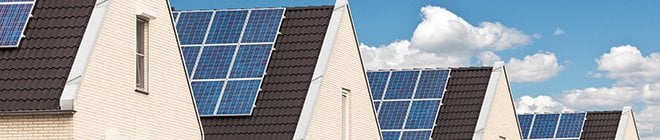
But based on Energy Saving Trust estimates, a typical household with a 4.5 kilowatt-peak system can knock between £190 and £330 a year off bills at current Energy Price Cap rates – and that's not including what you get paid on an export tariff.
-
You'll need an 'export' tariff to get paid for what you don't use – but be aware rates differ massively
The Smart Export Guarantee (SEG) scheme pays you for each kilowatt hour (kWh) of electricity that your solar panels generate, and then export back to grid.
The amount you can earn will depend on how much of your solar-generated electricity you use yourself, as the more you use, the less you have to sell.
It also depends on your provider, as rates can range from just 1p per kWh to 25p per kWh – so make sure you go for the best paying tariff you can. See how to get the best solar export rates for full info.
To get a SEG tariff you must ensure...
-
You have a working smart meter. As your energy provider will need to be able to accurately record how much you export. A smart meter also helps you track your energy usage and solar generation.
-
Your solar panel system and installer is 'MCS' certified. Your system and the installer must meet the standards of the Microgeneration Certification Scheme (MCS). It's also worth making sure the installer is a member of the Renewable Energy Consumer Code or Home Insulation and Energy Systems Quality Assured Contractors Scheme (HIES).
-
-
The break-even point is at least 10 years
The price of a typical 4.5 kilowatt-peak PV solar panel system is about £7,600. Based on the Energy Saving Trust's figures, it could take a typical home at least 10 years to recoup the costs of installing panels, based on current Energy Price Cap rates.
Energy Saving Trust's solar panel calculator
Plug your details into the Energy Saving Trust's solar panel calculator for a decent estimate of how long it'll take to break even.
Note: It is an estimate. The cost of energy and what you're paid for exported energy can change. This calculator is based on an electricity unit rate of 25.8p/kWh and a Smart Export Guarantee rate of 12p/kWh.
Your break even point depends on where you live and how much you use or export
For a rough estimate of how long it'll take to break even, see our table below. But be aware, a combination of factors will determine how quickly you'll recoup your outlay:
-
How much you'll save or earn depends on where you live. In general, the further south you live, the greater the bill savings you can make. That's because it's all about daylight, not hours of sunshine or temperature. Northern homes get slightly less, so where you live needs to be factored in.
-
If you're at home all day, it would take you less time to make your money back. This is all about how much electricity you're using. If you're home all day, you're using more electricity while your panels are generating energy, so bill savings are greater - and though you'll export less, the bill savings currently outweigh this.
If you're only at home in the evening, the reverse is true - you get lower bill savings, but higher SEG payments from exporting more. The range in our table below is based on whether you're at home all day or not (the more you're at home, the higher the savings).
How long it will take to break evenLocation
Annual bill saving
Annual SEG payments
Total annual benefit
Time to break even
London
£200- £330
£600 - £700
£900 - £930
9 years
Aberystwyth, Wales
£190- £320
£550 - £650
£840 - £870
9-10 years
Stirling, Scotland
£180 - £290
£450 - £500
£680 - £740
11-12 years
Electricity bill savings based on Ofgem typical use 2500kWh/year on the July Price Cap rate and Smart Export Guarantee payment rate of 15p/kWh. Grid electricity consumed and amount exported is estimated using Energy Saving Trust's solar energy calculator. No maintenance or repair costs are included. Assumes no electric heating or heat pump.
However, this assumes the SEG will be available for the next 10+ years. While there are no plans for the scheme to end anytime soon, there's also no guarantee the scheme will last this long.
-
-
To max your savings, use most of your electricity while you're generating it
While you currently pay roughly 26p per kWh for electricity on a standard tariff under the July Price Cap, most will likely get paid quite a bit less than this for the energy you don't use yourself and sell back to the grid.
So try to shift as much of your electricity use as possible to when you're generating it (in other words, in daylight hours), as unless you have a solar battery, you're unable to store it to use later.
While it means you'll be exporting less, so will get paid less, overall you'll be a lot better off, as you won't be paying for as much pricey energy.
For tons more top tips from solar nerds, read the MSE Forum's Make the most of solar panels thread.
-
A solar battery could add years to your break even point

A solar battery can store any excess power generated by your solar panels that you don't use at the time, rather than exporting it back to the grid. The Eco Experts estimate the average price to be around £5,000.
The price you're paid for each unit of energy you export to the grid is usually much lower than the price you pay your supplier for electricity. So, economically, it makes more sense to store the solar energy and use it yourself. For full info on solar batteries, see our Is solar battery storage worth it? guide.
-
Not all homes are suitable for solar panels
To maximise what your panels can make, it's best to make sure your home is right for them:
-
North-facing roofs aren't a great option for solar panels. As they get very little direct sunlight. You'll get the maximum benefit if you have a south-facing roof. East or west-facing roofs can also work well, but you might not get the maximum savings.
-
Your roof should be unshaded between 10am and 4pm. While some early or late shading from other buildings or trees is OK, during the peak period for daylight you want the panels to be out of any shade.
-
You need a fair bit of space. Solar panels typically take up two square metres each, so the size of your roof matters.
-
Your roof needs to be in good condition. Make sure you've had an inspection carried out to ensure your roof isn't damaged, as this could affect the installation.
-
Got a flat roof? It may cost you a little more. If you want to install panels on a flat roof, you may need fixings to hold the panels in place, which will add to the costs.
-
You generally won't need planning permission. In England and Wales, the Government's Planning Portal says that panels are likely to be considered as 'permitted development' – meaning you don't usually need to apply for planning permission.
The big exceptions are if your property is listed or is in a conservation area. In these cases, you might need to get approval from your council's building control team, so check with your local authority.
-
-
If you're likely to move home in the next decade, it might not add up

As it typically takes about 10 years to recoup your installation costs, if you're considering moving, solar panels probably aren't worth it (though it can push up the value of your home).
While you could technically physically remove the panels from your old home and install them on the new one, this could prove costly and likely won't be worth it as you wouldn't get paid for what you export. To receive payments, your panels need to be certified by the Microgeneration Certification Scheme and it told us it wouldn't certify panels that have been moved.
Solar panel installations are also tailored to each home – to fit the roof and be positioned to maximise the level of sunlight they receive – so it's likely they wouldn't perform as well if you installed them on a different home anyway.
Are solar panels covered by home insurance?
Generally speaking, solar panels are typically covered under standard buildings insurance policies for damage, such as storm, fire, and some even cover glass breakage. Solar panels are also typically covered by a manufacturer warranty, so if you do notice a fault, you should first contact the company that installed them before going to your insurer.
If you don't yet have solar panels but are looking to get them, tell your insurer before you get them fitted to make sure they have no concerns regarding the works going ahead.
-
Don't assume you'll always recoup the cost of solar panels on your home's value if you sell your house
Some people assume that a more efficient home generating its own energy would be more attractive to buyers. But others worry that 'ugly' panels plastered all over their roof could push the price of their house down.
Solar panels are a hefty investment and might not be suited to those planning to move in the next few years – certainly you shouldn't expect a big upfront investment to be immediately reflected by a jump in your home's value.
Do solar panels increase home value?
Trade body Solar Energy UK recently published a report which found homeowners who move having had panels installed would claw back some of the value of their investment in a higher sale price.
It looked at more than five million property transactions and said a typical home with solar panels could increase in price by up to 2%. Others, such as The Eco Experts, say solar panels could increase a property's value by as much as 14% on average.
When we asked NAEA Propertymark (the National Association of Estate Agents) for an overview, it was more cagey. It said: "Having such sustainable technologies will become more attractive for homeowners in the future. There are benefits to having solar panels – however, in the short term, they don't provide an increase in house value, with the panels often costing more than they attribute in value.
"With houses coming on to the market in short supply and other factors, people are being forced to compromise on their preferences, including energy saving measures."
-
You can still switch energy supplier
If you have solar panels, don't think this locks you in to your energy provider – you can still switch your supplier. You can do a bespoke full market comparison or see what's available in our Should you fix? guide.
Your energy provider doesn't need to be the same as the supplier that pays you for your solar-generated energy, so you're free to switch. Though with some providers you can get better export rates if it also supplies your energy.
Plus, if you have other renewable tech, there are specialist tariffs for EV users or homes with a heat pump.
-
Solar panels can last around 25 years
Solar panels have a life span of around 25 years or more, but this can vary depending on the type of panels and when they were installed. According to experts, some of the latest models of solar panels that are being installed could have a useful life of 40 years or more. Either way, their efficiency will begin to slowly decline after around 20 to 25 years.
Solar panels are recyclable
Most of the materials used to make solar panels are widely recycled, but there are some components that must be disposed of by a specialist and should never go to landfill.
All solar panel manufacturers and importers in the UK are required to join a Producer Compliance Scheme (PCS), such as the Government-approved PV CYCLE. So once your solar panels have reached the end of their useful life, you need to ensure they're removed and recycled properly, through an approved scheme.
You don't need to pay for solar panels to be removed and recycled
Under EU regulations, your solar panel installer is legally obliged to take your obsolete solar panels off you at no cost – that's right, it shouldn't cost you a penny. They'll take your old panels to a designated collection facility before the panels go on to a recycling plant.
-
Solar panels are generally low maintenance
Solar panels are designed to be low maintenance and we get enough rain in the UK to keep them working efficiently without the need for regular cleaning. It's a good idea to keep any nearby trees well-trimmed, to avoid shading your solar panels. Your installer should leave you with troubleshooting guides and maintenance guidelines.
You can opt for bird deterrents, also known as 'pigeon-proofing', to be installed around your solar arrays to prevent birds from nesting under your panels. This is sometimes included in your installation price, but you may need to pay extra for it, so do check with your installer.
The Energy Saving Trust says little maintenance is required on a properly installed, well-designed solar PV system, though you'll likely need to replace the inverter – a gadget that is a key part of the mechanism – within about 10 years (costing around £800).Of course, things can go wrong. If so, check the installer warranty you get – it can cover you for up to 20 years. If the panels are damaged by something unexpected, such as a storm, you may also be covered by buildings insurance – check with your insurer before you have them installed.
-
Watch out for scam ads offering cheap installation and maintenance
We've heard numerous reports of scam emails and websites offering cheap solar panel installation and free health checks, so do be careful.
It's important you do your research and use a reputable company before getting solar panels fitted and once you've got them, don't fall for ads trying to sell you solar panel servicing or cleaning.
How to buy solar panels
If you’ve decided solar panels are right for you, there are two main options when choosing how to buy: find an installer or go through your energy supplier. Plus, there's funding available for some households.
Option 1: Find registered installers and get three quotes
As we're MoneySavers, not electricians, picking solar panel installers isn't our speciality. But a good place to start is the Microgeneration Certification Scheme (MCS) find an installer tool. Or, to get a quote, you can try the Federation of Master Builders tool below (the FMB is a trade association for the construction industry). It works with selected solar panel installers, which have nationwide coverage, are certified, and are subject to certain customer service and financial security checks.
Federation of Master Builders quote tool
To use the Federation of Master Builders’ quote tool*, just answer a few quick questions about your property and add your address and contact details. You’ll then be matched with up to three installers, who’ll contact you directly to arrange a quote.
The three solar panel installers on the comparison panel are offering discounts when you get quotes via our link. You'll get a regular quote, with the discount then taken off – but do still compare quotes with different installers to ensure you're getting the best price for you. This offer ends 11:59pm 28 September 2026.
Glow Green: £550 off any solar system products
Project Solar UK Limited: £550 off any solar system products
Lime: £550 off any solar system products
Note: These aren't necessarily the cheapest or best performing providers, and while they have been vetted by the Federation of Master Builders (and all have strong scores on Trustpilot), always do your own research before agreeing to any work (and do let us know how you get on).
As always, get at least three quotes, and get 'em in writing. When comparing quotes, check the following are included: scaffolding, internal wiring works, sorting out a connection agreement with the energy supplier, electrical connection work, and a generation meter.
Once they're fitted, registering your panels is a must – you'll need an MCS certificate, which you'll use to register for Smart Export Guarantee payments with a licensed energy supplier.
Option 2: Buy solar panels through an energy supplier, who then might give you preferential export rates
Most of the big name energy providers offer ways for you to buy solar panels through them. They generally have partnerships with installers, credit brokers and lenders.
Some suppliers offer financing options (through their partnerships with credit brokers), like 0% interest for up to three years, which can make buying solar panels more affordable without the upfront costs. But don't go for it just for the 0% financing - you need to compare quotes with independent reputable MCS-certified installers to see if it's actually a good deal.
As well as financing options, most energy suppliers will often give you preferential export rates if you choose to buy your solar panels through them.
Should I go to a provider that does me a deal on solar panels and gives me a higher guaranteed SEG rate?
Not necessarily. You need to look at the whole package: how much does the system cost to install, how much will you get paid to export, what’s the best rate you can get for your electricity supply. It's also worth noting that the attractive export rates offered when you buy solar panels through a supplier are often short-lived, and revert to a lower rate after 12 months.
If you choose to pay for panels on finance, make sure the interest doesn't outweigh the savings
Some installers let you buy solar panels on credit, through finance agreements. While many offer interest-free finance, some don't. So make sure you check the terms, as the interest charged could dwarf the savings.
Pay with a credit card for extra safety if you can
Pay by credit card for something over £100, and Section 75 laws supercharge your consumer rights. Unlike with debit cards, cheques and cash, pay in full or in part (even just £1) on a credit card, and by law the lender's jointly liable with the retailer.
This means you have exactly the same rights with the card company as you do with the retailer, so if it goes bust, you can simply take your complaints there instead and get money back if there's no delivery. See our Section 75 guide for a full explanation.
If paying by debit card, there's also valuable hidden protection that means you may be able to get your money back if something goes wrong. It's called 'chargeback' and applies to most debit and charge cards, as well as Visa, Mastercard and American Express credit cards – though it isn't a legal requirement. See our Chargeback guide.
It's possible to get solar panels through a subscription
Subscriptions are a more complex way of getting solar panels - so you need to make sure it's right for you. Sunsave is currently the only firm to offer solar panels on subscription in the UK.
Here, you pay for solar panels over a set period, say 20 years. There are no (or little) upfront costs, and instead you pay a fixed monthly fee, which usually covers the solar panel and battery installation, repairs and maintenance. Yet it can make things more complicated if you're looking to sell your home.
So it's always worth checking the terms of the agreement before signing so you know what to expect.
Will I own the solar panels?
The main type of solar panel subscription is where you OWN the solar panels.
In this case, it isn't a lease or rental agreement, meaning you'll own the panels from the outset and can benefit from smart export guarantee payments for any electricity your solar panels generate that you don't use. Sunsave Plus is an example of such a scheme (though we have no feedback on it).
But do check, as there are companies that offer solar panel leasing, where you give a solar panel company the right to use your roof, in exchange for using the electricity the panels generate.
What happens if I move home?
Selling a property with a long-term subscription may not always be straightforward. If you own the solar panel system from the outset, the new property owner can agree to take over the contract as part of your house sale.
Alternatively, you may be able to pay off the balance of your contract early, but this could still be a large sum depending on your installation costs and how much you've left to pay. Sunsave Plus says you're able to do this without paying any early repayment fees or penalties. In which case, you could add the remaining cost of the contract to the sales price of your home and fully repay it before you sell.
Will a solar panel subscription affect my ability to get a mortgage?
Generally speaking, these subscription services won't affect your ability to get a mortgage, but lenders will take them into account when working out your affordability to make monthly mortgage repayments. If you already have a mortgage in place, you may need to check with your lender before signing up to one of these subscription services.
There's funding available for some households to get solar panels
There's help available to get solar panels installed in your home, but you usually need to be on certain benefits or have a low income to be eligible. What each scheme offers, and its eligibility criteria varies:
-
Warm Homes: Local Grant in England. You could get free energy saving improvements made to your home if you’re on a low income, getting certain benefits or living in a certain postcode area. This could include solar panels, as well as other energy-efficiency measures. It's only available to certain postcodes in England, and you need to apply through your local council. You can check if you're eligible in our guide, and if you are, your local council will usually contact you within 10 working days to get more information and arrange a home survey.
-
Warmer Home Nest Scheme Wales. The Welsh Government initiative offers free energy-saving home improvements, including solar panels. You may be eligible if you own or privately rent a home that's expensive to heat, and you or someone you live with receives a means-tested benefit OR has a chronic respiratory, circulatory or mental health condition. You can check full eligibility details on the Nest Scheme website.
There are no grants available for solar panels if you live in Northern Ireland or Scotland.
Other key renewable energy guides:
How to get the best solar export (SEG) tariff. Get the best rate for the electricity you export.
Is solar battery storage worth it? Adding a storage battery to your system could be worth it for some.
Heat pumps explained. Can a heat pump save you money on your energy bills?
Share this guide?