




Cheap breakdown cover
Basic and full cover from £57/year

Many are paying over the odds for breakdown cover as they let it auto-renew year after year. This guide reveals the cheapest full-service policies, how to get AA and RAC cover for less, and other tips to really drive the savings.

First, a quick overview of breakdown cover...
Breakdown cover can be cheaper than you think, but too many drivers waste cash by allowing policies to auto-renew at inflated prices, or by not comparing deals. Here's what you need to know and how to cut costs:
Check you’re not already covered. Some packaged bank accounts include breakdown cover, so look before you buy.
Watch the no-claims period. Most policies won’t pay out in the first 14–30 days.
Cheapest full-service policy: £57 a year for you AND your partner.
- AutoAid* has been among our top picks for nearly two decades, and usually gets strong feedback. Its £57.28 a year policy (£22 more if the car's 16+ yrs old, and there's a £25 call-out fee if the car's 10+ yrs old) and covers you and your spouse or live-in partner (make sure you add them in the 'Enhanced cover' section) when you buy the policy in any car you/they drive.
- Eversure Gold* costs £57.50 a year and has similar cover. We've less feedback, but what we do have is decent.Car breakdown firms are among the easiest to haggle with. Renewal quotes are often sky-high, yet in our latest poll, 91% and 90% of RAC and AA customers who haggled got a better deal – many saved £100+ with a quick call.
Want a new AA or RAC policy? Use a cashback site to save up to 50%. This is for new policies, so if you're with the AA, go for the RAC, and vice versa. Buy via Topcashback or Quidco and it can work out at '£29 a year' for basic cover or '£68 a year' for full service.
What is breakdown cover?
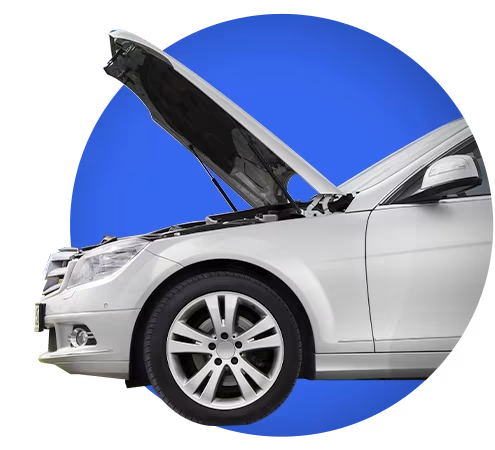
Breakdown cover helps if your vehicle conks out. Most policies include:
Roadside assistance: a mechanic comes to you and tries to fix the car on the spot.
Breakdown recovery: if it can’t be fixed roadside, your vehicle's towed to a garage.
Basic policies cover just these essentials. Full-service policies add extras such as home start and onward travel (for example, a temporary replacement car). More on the differences below.
Is breakdown cover included with car insurance?
Usually not. Some insurers offer it as an optional add-on, so check your car insurance policy documents or give your insurer a quick call to confirm whether you already have it.
Can I buy breakdown cover and use it straight away?
It depends. Some providers do offer instant breakdown cover, though joining at the moment you break down can mean paying a hefty surcharge.
Others have a waiting period of 14 to 30 days, during which you can’t claim for a new breakdown. If you need cover immediately, check the policy carefully so you’re not caught out.
7 breakdown cover need-to-knows
With the days of mutual motoring clubs long gone, roadside assistance and roadside recovery policies are big business. So forget loyalty and focus on getting the top deal. Here are seven need-to-knows to read before checking our top picks...
1. Never auto-renew – car breakdown firms are among the easiest to haggle with
When it comes to haggling, don't think you need to be in backstreet bazaars – haggling successes are high with vehicle breakdown providers. In our latest poll (Jan 2026), the AA was rated the easiest firm to haggle with, with the RAC close behind. See our top 15 service companies to haggle with.
Our Breakdown cover haggling guide walks you through the steps, but here’s how MoneySavers fared with the major breakdown firms:
PROVIDER | NUMBER OF RESPONSES | SUCCESS |
|---|---|---|
RAC | 229 | 91% |
AA | 437 | 90% |
Green Flag | 56 | 80% |
Other | 54 | 72% |
Poll carried out in January 2026.
We regularly hear from MoneySavers who’ve cut £100+ off their renewal for nothing more than a five-minute conversation and a bit of charm. Here's inspiration before you begin:
Thanks for the haggling advice. Just spent five minutes on the phone to the RAC and got my renewal slashed from £252 to £151. Just over £100 for about five minutes' work – that'll do nicely!
AA renewal came in at almost £200, final cost around £120, same price as new customers. Always haggle!
For step-by-step guidance and example scripts, see our full Breakdown cover haggling guide.
2. Choose the right level of cover for your car
If your car’s fairly new and unlikely to have problems, basic cover may be enough. If it’s older or less reliable, you’re usually better off with a full-service policy.
If you’ve recently bought a modern car, you may already have breakdown cover included for the first year, as many manufacturers bundle it with new vehicles. If so, there’s no point paying for a separate policy, just check the included cover is sufficient.
Some car insurance policies also offer breakdown cover as an add-on. It’s worth checking your policy documents before buying anything new.
The three main types of UK breakdown cover
Policies fall into three main categories. If a policy includes only the first, we classify it as 'basic'. If it includes all three, we call it 'full service'.
-
Basic cover. Typically includes roadside assistance only. Your car, van or motorbike will be fixed at the roadside (for example, a flat battery or puncture) or towed to a nearby garage. It usually doesn’t cover you if you break down close to home.
-
Home start. Adds cover if your car won’t start at home – common for flat batteries or electrical faults.
-
Onward travel. If your car needs garage repairs, this usually provides a hire car for up to three days, a night’s accommodation, or help with public transport costs so you can continue your journey.
3. Always check whether you're covering a car or a person
Breakdown cover can apply to either a specific vehicle or to you as a person.
-
Vehicle cover protects one specific car, van or motorbike.
-
Personal cover protects you in any car you’re driving, or even as a passenger.
Personal cover is usually more expensive, so it’s only worth it if you regularly drive different cars. If you don’t swap motors, the pricier option isn't necessary.
Caravans, motorhomes and camper vans
If you’re towing a caravan, most breakdown policies will cover it too. Most specialist caravan policies don't include breakdown recovery, so if the caravan can’t be moved (for example, your caravan hits a pothole and damages its chassis), your car breakdown provider should tow it home or to a garage.
For motorhomes and camper vans, rules vary. The AA and RAC cover motorhomes under 3.5 tonnes on personal plans, but each has its own width and length limits, so check before you buy.
4. A joint policy can be cheaper than two single policies
Getting a joint policy for you and a spouse or partner (or even a family policy) often works out cheaper than buying individual cover for each person. For example, Eversure Gold* and AutoAid* will cover you and your spouse for about £58 a year, roughly the same price as their individual policies.
Big-name providers show a similar pattern. The RAC* is priced from about £57 a year for an individual or slightly over £70 for a couple. The AA* offers basic cover from about £72 for an individual or around £90 for a couple. Quotes can vary by age and address, so expect to pay more than the lowest example.
You can sometimes beat both single and joint prices using cashback sites, but the key point stands: joint policies often cost less than two singles.
The same can apply to car insurance, though not always. See our Multicar insurance guide for more.
5. Some fee-paying bank accounts offer breakdown cover, so check if you already have a policy
Many packaged bank accounts (accounts with a monthly fee) include a bundle of benefits, and breakdown cover is often one of them. Before buying a new policy, check you’re not already covered.
It can sometimes be cheaper to get breakdown cover through a packaged account rather than buying it separately. But do the maths and only buy cover via your bank or building society if you'll use all the features, which often include mobile phone and travel insurance too.
Our top pick is the Santander Edge Explorer account. It usually costs £17/mth (£204/year) but for a short period, you can get a £180 switch bonus, which covers the cost of the account for more than 10 months the year, plus right now you also get a £150 worldwide hotel voucher.
The Santander Edge Explorer account includes UK and European breakdown cover with home start and onward travel, as well as mobile phone insurance and worldwide travel insurance. See our Packaged bank accounts guide to see how you get this.
For more options, see our Packaged bank accounts guide. In the past, sometimes this type of account was mis-sold, so to check if you've got a claim, see our Packaged accounts mis-selling guide.
6. Driving in Europe? Make sure your policy covers breakdowns there too

If you're planning to travel to Europe regularly, consider taking out an annual breakdown policy with European cover.
If you only go abroad for a few days or a couple of weeks each year, a cheap UK policy that lets you add European cover when needed can work out cheaper. Just check how quickly the European add-on comes into effect – some providers impose a 15-day exclusion period before you can claim, so planning ahead is important.
See our cheap European cover section for the best deals on both annual and single-trip policies .And don't forget: you'll still need travel insurance, and you should notify your car insurer before driving abroad to ensure you’ve got the right level of cover.
7. Keep your vehicle road-legal to ensure your cover is valid
Breakdown firms can refuse to help if your vehicle isn’t taxed, insured or roadworthy. At best, you may be towed onwards for a hefty fee, or simply moved to the nearest safe area if you’ve broken down somewhere dangerous. Most providers include clauses stating they’re not obliged to attend to unlawful or unsafe vehicles.
To avoid any problems in an already stressful situation, make sure your road tax, insurance and MOT are all up to date, and keep your vehicle in good condition – check oil, water and tyre pressures regularly.
Top-pick full-service breakdown cover deals
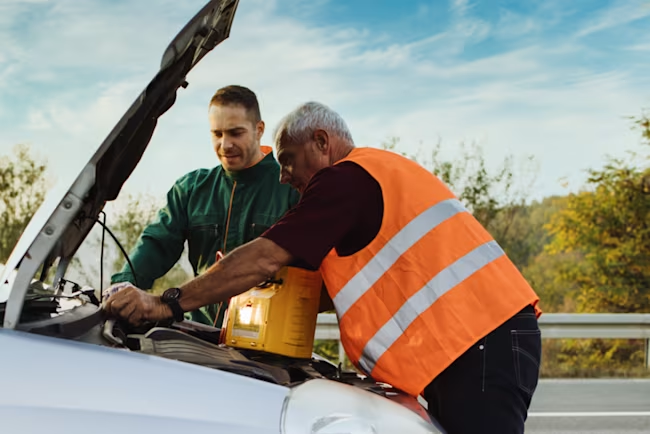
Full-service policies include roadside assistance, home start and onward travel, making them ideal if your car’s older, less reliable or you want the reassurance of continued travel after a breakdown. Below are our top-value full-service picks from across the market.
Always diarise your renewal date a month early so you’ve time to benchmark prices and switch, or use the cheapest market deals to haggle with your existing provider.
Let us know your experiences with these providers in the forum discussion.
WARNING. Most policies give discounted pricing for the first year. They might also offer new-customer perks, such as free spouse cover or battery replacement. Prices usually rise at renewal, so always look for a better deal before your policy auto-renews.
PROVIDER | HOW GOOD IS IT? + COVER COSTS (i) |
|---|---|
| Get full-service cover for you and your partner for £57.28 a year via our AutoAid* link. It’s been one of our top picks for nearly two decades. The policy covers you and your spouse or live-in partner you name (make sure you add them in the 'Enhanced cover' section) when you buy the policy in any car you or they drive, and includes roadside recovery, home start, onward travel, misfuelling cover, and help if you’re stuck (eg, in snow or mud). Older cars: AutoAid is less cost-effective if your car’s older. There’s a £25 call-out fee for vehicles aged 10+ years, and the policy costs £21.90 more if your car is over 16 years old. If your car’s between 10 and 15 years old, Eversure below may work out cheaper. AutoAid gets strong feedback, though it doesn’t use its own recovery fleet – it sends local operators instead. |
| Full-service cover for any car up to 15 years old for £57.50/yr, via this Eversure Gold* link. This policy gives full-service cover in any car you or your partner drive, or are passengers in. It also gives misfuelling cover. Like AutoAid, Eversure uses local recovery operators rather than its own fleet. It’s a newer addition to MSE; feedback so far is positive, and we’d love to hear more from MoneySavers who’ve used it. Tell us about your experiences. |

Cheapest AA and RAC breakdown cover

The AA and RAC are the biggest names in the breakdown market – but buying direct is usually pricey. A new policy can easily cost close to £100 for basic cover when bought direct.
New customers (so if you're with the AA, switch to the RAC and vice versa) can often cut this substantially by going via a cashback site, though cashback is never guaranteed, sometimes paused by one or the other, and you’ll always pay the full upfront price first.
How cashback works (AA & RAC)
Cashback changes constantly and depends on the quote you're given. The 'effective prices' below assume cashback is paid, but your own quote and cashback tier may be different. Always check both Topcashback* and Quidco* as the winner changes often.
Remember:
You must pay the full upfront price.
Cashback can take weeks or months.
Treat it as a potential saving, not a guaranteed one.
Direct AA/RAC prices can be steep, especially for full-service policies, but cashback can knock a chunk off, sometimes by 30–50%. Because quotes now vary by age and address, we can’t give exact savings for everyone. Let us know your experiences in the forum discussion.
Buying route | AA | RAC |
|---|---|---|
Cheapest basic cover | ||
From £67 | From £57 | |
Buying via Topcashback* or Quidco* | Currently paused | From £29 |
Cheapest full cover | ||
From £100 | From £109 | |
Buying via Topcashback* or Quidco* | Currently paused | From £68 |
Remember, cashback is never guaranteed. Prices rounded to the nearest pound and are based on vehicle cover.
Correct: 26 May 2026
How to get the cheapest RAC cover

The RAC also offers two main levels of cover:
RAC basic breakdown cover* – roadside assistance only; they’ll try to fix the car at the roadside or tow you to a garage if needed.
RAC full-service cover* – adds home start and onward travel, so you’re covered if the car won’t start at home and you can still continue your journey after a breakdown.
The RAC (and AA) tailor quotes based on age and postcode, so prices vary. The lowest direct quotes we found were:
Basic: from £57 for 'Vehicle' cover or £62 for 'Personal' cover. Cover two people and the 'Personal' cover increases, from £74.
Full-service: from £109 (Vehicle cover), £139 (Personal cover) or £125 for two people.
New customers can reduce these using cashback sites Topcashback* and Quidco. Cashback is tiered in the same way as the AA – sometimes a higher quote can produce a better cashback rate.
Examples from our checks:
A £57 basic-cover quote qualified for £29 cashback, giving an effective cost of £28.
A £109 full-service quote qualified for £41 cashback, giving an effective cost of £68.
Cashback-site quotes can sometimes be slightly higher than buying direct, but the cashback usually outweighs this. And remember: RAC policies limit you to five call-outs per year, so factor that into your choice.
Cashback isn’t guaranteed, and payouts take time. Always compare both cashback sites before buying.
If you've got Clubcard vouchers, you can use them at double face value (so £10 becomes £20) to purchase cheap RAC cover.
How to get the cheapest AA cover
Important: AA has currently paused its car breakdown cashback offers, so if you’re hoping to get cover from it at a cut price from the AA, you’ll need to wait for now or seek an alternative.
The process is otherwise the same, and we’ll keep an eye on things to update you as soon as the AA cashback returns.
If you’re set on one of the big names, RAC is still an option in the meantime. And if you’re already with RAC and not happy with your renewal, it’s worth trying to haggle.
Green Flag – an alternative to AA and RAC
Green Flag could work as an alternative well-known provider to the AA and RAC for some, and the cover options are similar – where you can choose to add on home start, roadside help and national recovery cover.
However, unlike with AA and RAC, here there's no joint or family cover – your options are to cover one or multiple cars, or to cover the policyholder as a driver or passenger in any car under 16 years old.
How does the price compare? Similar to the AA and RAC, what you'll pay varies based on a number of factors, including your age, where you live and the car itself. As an example, cover for a six-year-old Vauxhall Corsa was £49 for basic cover, which increased to £60 with home start and national recovery included.
Already with AA or RAC? Green Flag currently says it’ll beat your renewal by at least 50% – or pay you the difference. Here's how it works:
You need to buy the Green Flag policy first.
Then email proof of your AA/RAC renewal quote within 30 days (include your Green Flag policy number).
If eligible, it’ll refund the price difference within 14 working days.
So, while it can be a big win, it’s not automatic – you’ve got to follow the process.

Top-pick deals with European breakdown cover

Here, if your vehicle breaks down when you're driving on the continent, it'll be repaired at the roadside, or perhaps at a local garage. The prices below are based on a three-week trip to France in a four-year-old Honda Jazz, to give an idea of how providers compare. If you're going for longer, to more countries and/or have an older car, prices tend to be higher.
If you're planning two or more trips or regularly drive to Europe (for example, you live in Northern Ireland and regularly visit the Republic of Ireland), then it's worth getting an annual European breakdown policy (or checking if cover via a packaged bank account is worth it).
Always diarise a month ahead of your renewal so you've time to benchmark the cheapest price and switch, or use the benchmarked prices to haggle with your existing provider.
Let us know your experiences in the forum discussion.
PROVIDER | HOW GOOD IS IT? + COVER COSTS |
|---|---|
| Compare multiple breakdown providers, plus a 15% discount via our link. This site zips your car's details off to a few providers to help you find the best price. Cover starts from circa £25* for three weeks in France, after the 15% discount. However, as we don't vet the companies it features, we can't vouch for their service. Let us know if you try it. |
RAC* (ii) | Big brand roadside assistance that includes a hire car or hotel if your vehicle can't be fixed there. The RAC* charged from £66 for our example of three weeks in France, though your exact quote may differ slightly depending on the age of your vehicle and how soon the trip is. The policy gives you 24/7 access to an English-speaking helpline, and a contribution towards costs if it needs to be fixed at a garage (the amount depends on which level of cover you go for). |
| AA roadside assistance that again pays for a hire car or hotel if needed. The AA* quoted £94 to cover our example of three weeks in France, though again, your quote may differ depending on the age of your vehicle and how soon the trip is. You may also pay less for a single trip if you're already an AA member. This policy gives you 24/7 access to an English-speaking helpline, plus you can pay extra to get a contribution towards the costs of getting the car fixed at a garage. |


(i) We have little feedback to share on Compare Breakdown Cover.
(ii) If you've got Clubcard vouchers, you can use them at double face value (so £10 becomes £20) to purchase cheap RAC Europe cover.
Looking for one-off or specialist policies?
If you're looking to cover a one-off journey, or need something more specialist, MoneySupermarket* allows you to compare car recovery quotes.
It misses some of the best deals, so it doesn't always get the very cheapest, yet if you've specific needs it can quickly find a competitive quote.
Check special breakdown cover deals
A few companies have special cheap breakdown cover and some car insurers bundle free breakdown with their car insurance cover (see Compare+ Car Insurance). These currently include:
Provider | Deal information |
|---|---|
| 20% discount for newbies via our link. You can either choose to cover all vehicles you own or, if you'd rather have cover for yourself in any vehicle you're driving or are a passenger in, you can opt for personal cover. To get the discount, use code MSE20 via our link (though the code may sometimes automatically be added). |
| 31% discount for new annual policies via our Start Rescue link. It offers vehicle cover or personal cover, so you can choose which you'd prefer. Breakdown assistance is provided by Start Rescue if the car's more than a quarter of a mile away from your home as standard, or you can opt to include 'Home Assist' for additional cost. And please let us know how you get on. |
| 15% discount for new policies via our link. Compare Breakdown Cover* is a broker, and offers a range of policies with different assistance providers. It therefore allows you to choose a variety of levels of cover for UK-only and Europe. Let us know if you try it. |


We have little feedback on these providers, so please let us know your experiences in our forum discussion (via the link against each provider).
How to complain about your insurance provider
The insurance industry doesn't have the best customer-service reputation and while a provider may be good for some, it can be hell for others.
Common problems include claims either not being paid out on time or at all, unfair charges, or exclusions being hidden in small print.
It's always worth trying to call your provider first. Alternatively, you can use free complaints tool Resolver. The tool helps you manage your complaint, and if the company doesn't play ball, it also helps you escalate your complaint to the free Financial Ombudsman Service.
Car breakdown FAQs
How safe are these policies?
Nobody can predict the future – even the most reliable companies can fall into bad times. As with any purchase, you should consider if you've any protection should the company you buy the cover from go bust.
We've checked with the Financial Services Compensation Scheme (FSCS) and, sadly, you wouldn't be protected on breakdown cover if the worst happened.
What happens if the breakdown company damages my car?

While this is unlikely, it's still worth knowing the score. If your car's taken away, you'll usually be given a document to sign when it's returned to you.
If you think the car's been damaged by the recovery company, refuse to sign the document and report the issue to the recovery company. It's crucial to do this as soon as you can, even if you're still at the roadside.
Get as much evidence of the damage as possible. Take photos – even a decent camera phone can be handy for this if there's no alternative – and write a report of what happened ASAP.
Take notes as fully as you can, including the name of the recovery firm, times and dates. Then contact the firm to find out how it plans to rectify it.
What if it doesn't repair the damage? If you aren't happy with the way it's dealt with the incident, it's time to submit a written complaint. The formal procedure for this will be set out in your policy terms and conditions – these will have been sent to you, but if you can't find them, just ask for another copy.
If it still doesn't resolve it... Even though you can't claim money back from the Financial Services Compensation Scheme (FSCS), if these companies are regulated by the Financial Conduct Authority (FCA) you can make a complaint to the Financial Ombudsman Service (FOS). All companies we include are FCA-regulated.
The independent free ombudsman service settles disputes between consumers and businesses, without costing you a penny. You need to leave eight weeks between registering your complaint with the firm and going to the FOS. See our Financial Ombudsman guide for full info.
What if I need roadside assistance and my pets are in the vehicle with me?
If you're unlucky enough to break down while your pets are with you, you'll still be able to receive roadside assistance. But transporting Fido and Tiddles is at the discretion of your insurer.
The RAC says it'll always attend vehicles carrying pets, but will decide on a case-by-case basis whether it's safe for the pets to travel in the recovery vehicle, or your vehicle if it's being towed.
The recovery driver has discretion over whether the pet can travel in the vehicle. However, pets are usually allowed to travel with the recovery driver unless they are distressed or vicious, or the driver has allergies. Unless there's a safety risk, guide dogs will always travel with their owners.
The AA says it'll transport any animal with its owner, unless it's not possible for health and safety reasons, at the risk of the pet owner. However, it does not offer transport for livestock and horses (for obvious reasons).
If you have pets in the vehicle with you when you break down, let your insurer know when you contact it for assistance.
For more information, check page 16 of the AA's policy booklet and the RAC website.
Share this guide?