





Home insurance add-ons
Which extras are worth considering (and which aren’t)

Home insurance policies often come with optional extras – from accidental damage to home emergency cover – but are they worth the extra cost? Some can be useful, others can be a waste of money. This guide explains the most common home insurance add-ons and how to decide if you need them. For everything else, see our main Cheap home insurance guide and use our Compare+ Home Insurance tool to find cheap quotes quickly.
What does home insurance usually cover as standard?
Before we look at common home insurance add-ons, it's important to understand what's included as standard. Most policies will typically cover you for the following:

Repair from damage. The cost of repairing damage to your home caused by sudden and unexpected events, such as burst pipes, fires, storms, flooding, and vandalism (wear and tear is usually not covered).
Buildings insurance covers the structure itself, while contents insurance covers damage to your belongings. Learn more in our Types of damage guide.
-
Replacement of items stolen from your home (including garages or sheds). Items typically covered include everything from furniture and electronics, to clothing and jewellery (read more in our Burglary and theft guide).
-
Legal liability. This covers you financially for accidental injuries or property damage caused to others in or away from your home, paying legal costs and compensation.
-
Alternative accommodation. If your home becomes uninhabitable due to a fire or flood, the cost of alternative accommodation is usually covered (though cover may be limited if the property is left unoccupied for long periods – see Unoccupied home insurance).
-
Replacement keys and locks. If keys are lost, stolen, or damaged. This can include changing door locks to keep your home secure, as well as replacing keys for windows, garages, or alarms.
-
Replacement of spoiled food. If your freezer or fridge breaks down unexpectedly.
For full detail on standard cover and exclusions, see our main Cheap home insurance guide.
Use our Compare+ Home Insurance tool to find cheap quotes
Our Compare+ Home Insurance tool incorporates all of our tricks and tips. It gives you a benchmark quote from comparison site MoneySupermarket, then gives you bespoke tips based on your answers to the question set to help you try and beat your top quote. Give it a try now...
What home insurance add-ons can you typically get?
Home insurance policies offer a range of optional add-ons that you can pay extra for. These can significantly increase the cost of your policy, so it's important to understand what they are and whether they’re good value.
Common home insurance add-ons include:
Accidental damage cover
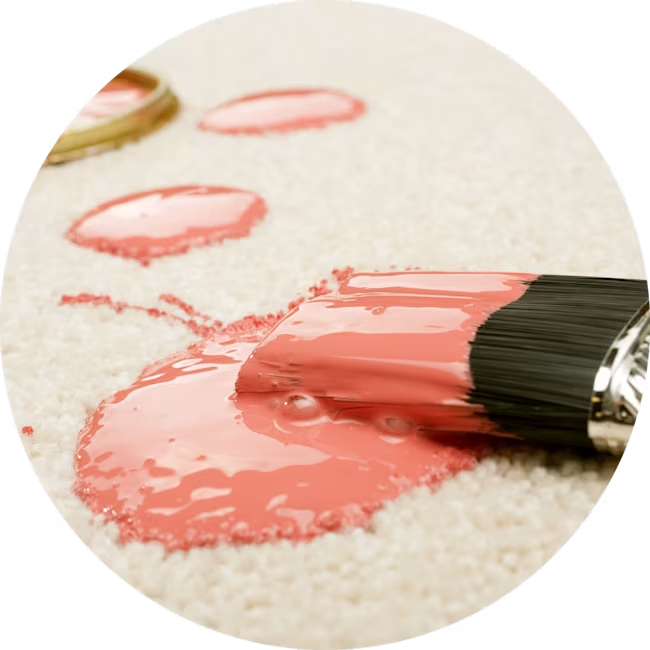
Accidental damage cover protects you against one-off incidents that damage your home or belongings, where the damage is sudden and unintentional.
Many home insurance policies include limited accidental damage for certain items as standard. You’ll need to pay extra to extend it to cover more.
Without accidental damage cover, many everyday mishaps won’t be insured. For example, spilling paint on a carpet or putting your foot through the ceiling, or hitting a pipe when putting a nail in the wall are unlikely to be covered unless you’ve added this extension.
Accidental damage can apply to buildings insurance, contents insurance, or both, depending on what you choose.
Contents insurance accidental damage typically covers things like:
-
Dropping your phone or tablet at home
-
Knocking a drink over a sofa
-
Accidentally breaking ornaments or furniture
Buildings insurance accidental damage can cover incidents such as:
-
Putting your foot through the ceiling while in the loft
-
Drilling into a pipe or cable by mistake while doing DIY
You won’t be covered for wear and tear, damage caused by poor maintenance, or anything that happens gradually over time. Damage caused by pets isn’t always included, so check carefully.
When it’s worth considering: Accidental damage cover can be good value if you have children (we know how clumsy they can be), are prone to mishaps, or have expensive flooring, worktops or tech that would be costly to repair or replace.
What to watch out for: Excesses can be high, making smaller claims poor value. Definitions of 'accidental' vary between insurers, so always check. Cover usually applies only inside the home – damage outside is typically covered under personal belongings cover instead.
Each policy will offer a different level of cover and will have a different definition of 'accidental', so always check these details before adding accidental damage to your policy.
Personal belongings cover
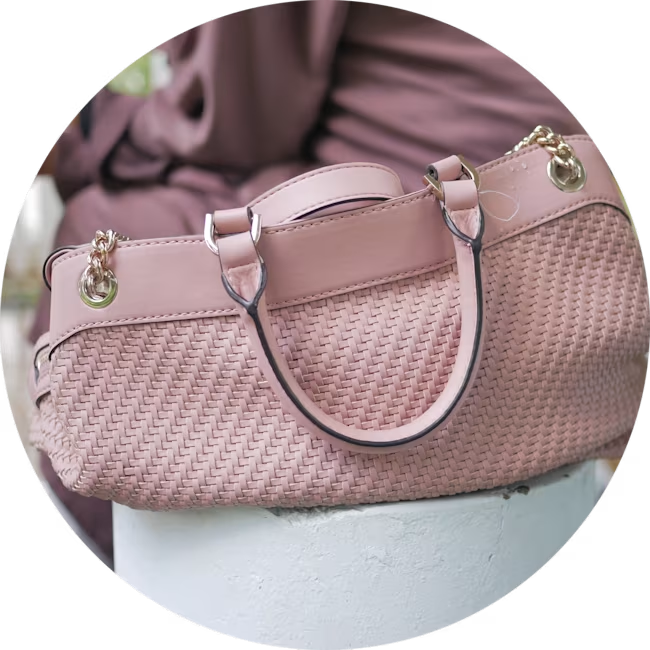
Confusingly, personal belongings cover goes by lots of names, including ‘all risks cover’, ‘personal effects’, ‘unspecified personal possessions’ or ‘personal belongings away from the home’.
Most home insurance policies don’t cover your belongings outside the home as standard. By paying extra, you can usually insure items such as jewellery, handbags, smartphones, tablets and cameras while you’re out and about. If it’s designed to be taken outside the home, it’ll normally fall under this add-on.
When you choose the cover, you’ll need to set the total value of items you want insured outside the home. For example, if you regularly carry a £500 ring, £200 camera, £200 glasses and £100 headphones, you’d typically choose £1,000 of cover.
Be aware insurers also set a ‘single item’ limit. If you take out individual items worth more than this (for example, a £2,000 engagement ring), you’ll usually need to list them separately when you get a quote – otherwise they’re unlikely to be covered.
When it’s worth considering: If you regularly take expensive gear out of your home, personal belongings cover can be good value. It can often work out cheaper to add this to your home insurance rather than buying separate jewellery insurance or mobile phone cover – but always compare.
When it's not worth it: For families only looking to cover household mobiles, a packaged bank account may work out better, especially if you’d also use the travel insurance these paid-for accounts usually come with.
What to watch out for: Excesses are often higher than on standalone mobile or jewellery policies, and any claim is likely to affect future home insurance premiums.
Mobile phone cover

Most home contents insurance policies already cover mobile phones if they’re stolen during a burglary or damaged in a fire. By paying extra, you can often extend this to cover accidental damage or loss or theft outside the home, usually including when you’re abroad – if this isn’t already included under ‘personal belongings’ cover.
Alternatively, you can buy a standalone mobile phone insurance policy.
When it’s worth considering: Mobile phone cover can make sense if you want protection for accidental damage or loss outside the home and don’t already have personal belongings cover. It may also suit households with several phones, where adding cover to a single home policy works out cheaper than insuring each phone separately.
When it’s usually not worth it: If you already have personal belongings cover or a packaged bank account that includes mobile phone insurance, this add-on is often unnecessary. Packaged accounts can be especially good value for families with multiple mobile phones, particularly if you’ll also use the travel insurance they typically include.
What to watch out for:
Excesses on home insurance claims are often higher than on standalone mobile insurance policies, and as usual, any claim is likely to affect future home insurance premiums.
Bicycle cover
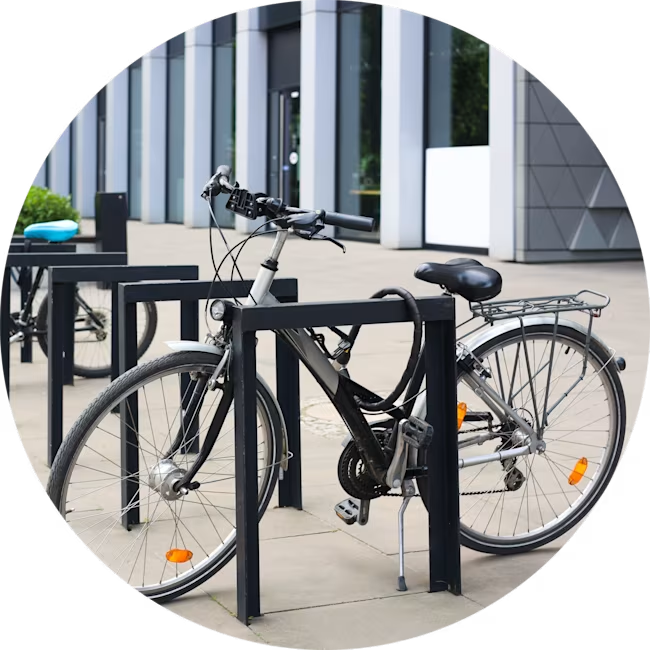
Many home contents insurance policies cover bikes if they’re stolen from your home as standard. Once it leaves the house, however, you’ll often need to pay extra to extend cover to theft or damage outside the home.
Even then, cover is usually limited to a set value, and insurers typically require the bike to be locked to a fixed object when left in public.
You’ll need to decide whether the cover included in your home insurance is enough, whether to add extra cover, or whether a specialist bicycle insurance policy would be better.
When it’s worth considering: If you own a cheaper bike and only use it occasionally, extending your home insurance to include bicycle cover or adding it under ‘personal belongings’ cover may be enough.
When specialist bike insurance is usually better: If your bike is worth £1,000s, or you cycle regularly, specialist bicycle insurance is often better value and more comprehensive than home insurance.
What to watch out for: Home policies often have high excesses and any claims can also impact your future home insurance premiums.
Legal expenses

As standard, home insurance includes legal liability cover if you accidentally injure someone or damage their property.
By paying extra, you can add legal expenses cover, which provides help with a wider range of legal disputes. What’s covered varies by policy, but can include:
Disputes over goods or services you buy or rent
Personal injury claims
Employment disputes
Property protection issues, including boundary disputes
Inheritance disputes
Legal defence following an incident at work
Clinical negligence claims
It’s important to note that home insurance legal expenses cover is separate from car insurance, so don't expect this to help with motor accidents or driving-related claims.
When it’s worth considering: The legal liability cover included as standard will be sufficient for the majority of home-related incidents, and many people already have access to legal help elsewhere, such as through their employer or trade union. But if you want peace of mind, it's usually not too expensive to add legal expenses cover to your policy – and some insurers even give it for free in your first year.
What to watch out for: Legal expenses policies often come with exclusions and conditions, meaning they may not cover the specific dispute you need help with when the time comes.
Home emergency cover
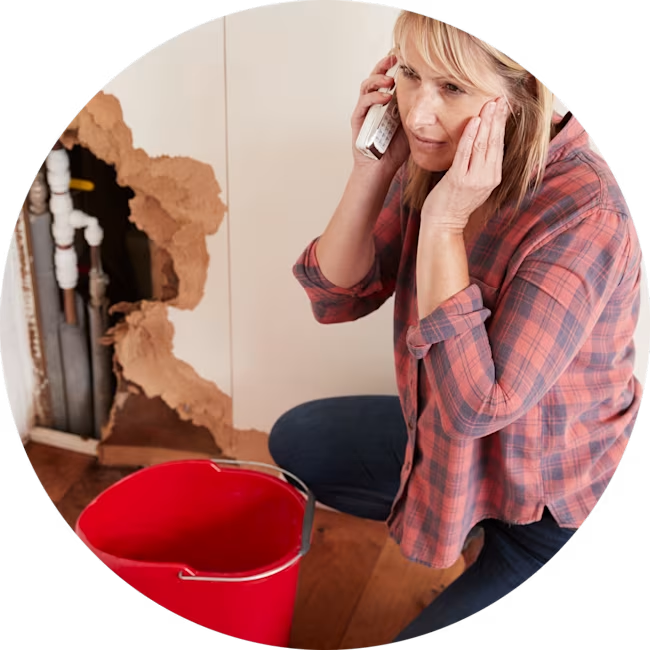
Home emergency cover is designed to help with urgent problems that pose a risk to your health, could make your home uninhabitable or leave it at risk of further damage if they’re not dealt with quickly. For example, a burst pipe you can’t turn off, or a broken boiler during freezing weather.
It typically covers call-out and labour costs for emergency repairs, often including issues with your boiler and central heating, plumbing, electrics, blocked drains, pest infestations and more. Cover varies widely between insurers.
Crucially, this cover is usually for temporary repairs only. It’s intended to make the situation safe or prevent further damage, not to provide a permanent fix.
When it’s worth considering: Home emergency cover can offer peace of mind if you want rapid access to an engineer in an emergency and don’t have savings set aside for an urgent call-out.
When it’s usually not worth it: If you want cover for replacing a broken boiler, or to permanently fix an issue, this won’t do it. In that case, standalone boiler cover – or paying for repairs as needed – may be better. See our Boiler cover guide for full help choosing a policy.
What to watch out for: Payouts are usually capped per claim, parts or permanent repairs are often excluded, and existing faults are usually not covered – so always check the terms carefully.
Want to learn more about home insurance? To find out more about home insurance generally, check out the following guides:
Share this guide?