





How to get a personal loan
Find the cheapest personal loans, from 5.6% for £7.5k+

Cheapest loan rates have finally started to creep down recently, though they're still close to double what they were a few years ago. If you NEED to borrow, this guide has full info on the cheapest loans – how to get them, and what to watch out for. Plus, our Loans Eligibility Calculator helps you find lenders more likely to accept you.

First, a quick overview of personal loans...
A personal loan lets you borrow a lump sum and repay it in fixed monthly instalments over a set period. It’s handy for bigger, planned costs (eg, a car or home improvements) because you get the cash upfront and spread repayments over time. You''ll pay interest, so the APR and the term length drive the total cost – the higher they are, the more the loan will cost overall.
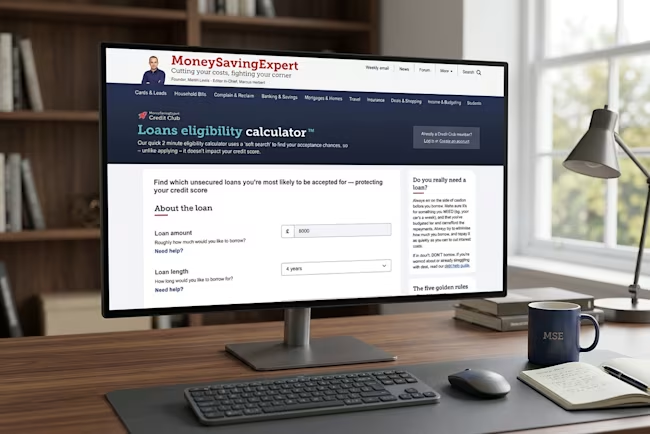
• Start with eligibility. Use our Loans eligibility calculator to see lenders you’re more likely to be accepted by before you apply, avoiding needless hard searches.
• Borrow as little, for as short a time as you can. Shorter terms mean higher monthly payments, but much lower interest overall.
• For smaller amounts, particularly under £3,000, a 0% spending card or money transfer card can beat loans if you’ll repay within the 0% window.
Amount loaned | Interest rate (rep APR) |
|---|---|
From 9.9% APR | |
From 9.9% APR | |
From 6.5% APR | |
From 5.6% APR | |
From 5.6% APR | |
From 5.6% APR | |
From 5.7% APR |
Warning: You might not get the rate that's listed. Representative APRs mean that only 51% of people who apply successfully need to get the advertised rate. Some providers in our Loans eligibility calculator do guarantee rates, so the rate shown is the one you'll get.
Now that we've given you a brief overview and you understand the basics, let's take you through personal loans in more detail...
What is a personal loan?

Personal loans, also called unsecured loans, let you borrow a set amount from a lender and repay it in fixed monthly instalments over an agreed term.
The lender charges interest as its fee for lending you the money, so you repay the total amount borrowed plus interest. The advantage is you get cash upfront but can spread the cost of a purchase over several months or years. Learn more about the pros and cons of personal loans below.
This guide details the cheapest personal loans and shows you how to apply online. It also looks at whether other finance options, such as credit cards, might be cheaper for you depending on your circumstances. Plus, we've our clever Loans Eligibility Calculator, which can tell you which lenders are likely to accept you before you apply.
What can I use a personal loan for?
While technically you can use a personal loan to pay for anything, a lender is likely to ask you why you want the loan. Generally, most personal loans are taken out for...
-
Home improvements – learn more by reading our Home improvement loans page.
-
Buying a new car – find out what this involves in our Cheap personal car loans guide.
-
Wedding expenses – though do remember it's just one day, so it's best not to borrow if you can avoid it
-
Covering an emergency – for example, car or home repairs.
-
Debt consolidation – though be careful with this. Check out our Debt consolidation loans guide to learn more.
Loan need-to-knows
1. Only borrow what you NEED – and repay it quickly
The formula’s simple – borrow as little as possible and repay as fast as you can. Always base your borrowing on what you can comfortably afford to repay (preferably after doing a budget), as borrowing too much can cause debts to spiral.
Longer terms may mean lower monthly repayments, but they massively increase the total interest you’ll pay. Borrow £10,000 at 7% over three years and the interest cost is about £1,100. Borrow the same over 10 years and you’ll pay around £3,900 in interest.
Use our Personal loan calculator to check what you can safely afford to borrow.
2. Weirdly, it can cost less to borrow slightly more – but be careful
While you should always aim to borrow as little as possible, loans have quirks. Sometimes, borrowing a bit more can mean a lower interest rate – and a cheaper overall cost.
Loan rates often drop at certain thresholds – typically £3,000, £5,000 and £7,500. For example (based on recent five-year rates):
-
Borrowing £2,770 → cheaper to take £3,000
-
Borrowing £4,710 → cheaper to take £5,000
-
Borrowing £7,260 → cheaper to take £7,500
So, if you’re close to a threshold, check if borrowing a little more saves money. Use our Loans Calculator to crunch the numbers.
But be careful:
-
You must be accepted for the higher amount
-
Only do this if you can afford the repayments
-
Above £15,000, rates don’t drop further, so the trick won’t work.
-
Under £3,000, a 0% money transfer card may still be cheaper
3. You might NOT get the advertised rate
Loan rates are usually 'representative' APR, meaning only 51% of accepted applicants need to get the advertised rate – many will be offered a higher rate, often only after applying, which marks your credit file.
That’s why it’s crucial to check eligibility first, so you don’t damage your credit score by applying blindly. With some providers, our Loans Eligibility Calc can show your actual rate before you apply. We're working to add more, but for now, the only way to know for sure is to apply.
4. ‘Credit card loans’ under £3,000 can be cheaper – but only if you’re disciplined
Before jumping into a loan, check if a credit card could work for smaller amounts. The key limit is your credit limit – most cards won’t give more than £3,000-£5,000 unless you’ve a high income and strong credit score. If you need more than that, a loan’s likely better.
If your spend is £5,000 or less, here are your options:
-
I can pay by card and clear it in 25 months. Some cards offer up to 26 months at 0% on purchases – useful if you can budget to clear it in time, or balance transfer before the 0% ends. Only works if the retailer accepts cards (many car dealers don’t).
-
I can’t pay the retailer by card. Use a money transfer card instead. It moves cash from the card to your bank account, so instead you owe the card (though there is a fee) and can spend it like a loan. The top deal now offers 0% for up to 14 months (3.99% fee). Clear it in time or balance transfer again.
-
I want to cut existing card debt. A loan usually isn’t cheapest. Balance-transfer cards let you shift debt to 0% or low-rate deals, often far cheaper than loans. See our Best Balance Transfers guide for top picks.
Golden rule: Treat it like a loan. Work out what you need to pay each month to clear the card within the 0% period and set up a direct debit. This way you're not tempted to skip months and end up owing debt at the end of the 0%.
5. Your credit score gets you accepted, your income sets the limit
Lenders look at two main things:
-
Credit history: This affects whether you’ll be accepted and the rate you’ll get. A strong record makes it more likely you’ll get the advertised rate. A weaker one? You may still get the loan, but at a higher rate as you’re seen as riskier.
-
Affordability: Your disposable income dictates how much you can borrow. Lenders calculate this from your income minus rent/mortgage and typical outgoings (based on where you live and dependants). Even with a perfect credit record, if your disposable income’s too low, you won’t get the loan.
Our Loans Eligibility Calculator and Credit Club mimic these checks to show your chances. Credit Club also scores your affordability from ‘poor’ to ‘very good’.
6. You can usually overpay or settle your loan early – sometimes for free
Lenders must let you clear your loan in full, though some charge a penalty – usually one to two months’ interest. Always check your agreement and ask for a settlement figure before paying early.
Since 1 February 2011, you can also make partial overpayments. If your extra repayments total under £8,000 a year, the lender can’t charge a fee. Go over £8,000 and it can charge, but only if it incurs a cost from you paying early.
7. Sub-prime loans – why we don't cover them
These loans are aimed at people with poor credit histories (for example, if you’ve had CCJs), but they’re hugely expensive and can trap you in a high-cost debt spiral.
First, see if you can get a standard loan by using our Loans Eligibility Calculator – it shows which mainstream loans you’re most likely to get without damaging your credit score. Some other eligibility checkers include loans with eye-watering rates, so you could end up with a sub-prime loan without realising.
If you can only get a sub-prime loan, ask yourself: can you really afford it and do you really need it? If in doubt, don’t borrow. If you’re struggling with debt, see our Debt Help guide. Also check our tips on How to boost your credit score.
Try our free Credit Club
Sign up to MSE's Credit Club to boost your credit power – access our free tools to see how the financial world views you, including:
An Eligibility Rating that combines your credit score, affordability, and market trends.
View your full credit report – your financial CV.
Get personalised acceptance odds for credit cards and loans.
Best-buy personal loans
If you're looking for a loan, check out the best-buy rates below. We list loans by 'bands' as the rate you could get differs depending on how much you want to borrow. If you're not sure how much you can afford to borrow or want to find out what your loan repayments would be, try our Personal loan calculator.
Cheapest loans under £3,000
Important. For loans up to £3,000 you could be much better off using a money transfer credit card if you can repay the full balance over 14 months.
LENDER | RATE (1-5 years or stated) | CHECK ELIGIBILITY + APPLY |
|---|---|---|
Representative rate. At least 51% of those accepted must get this rate, others can be charged more. | ||
Zopa via John Lewis Finance | 9.9% rep APR (1-7 years) | |
Santander | 13.5% rep APR | |
M&S Bank | 14.9% rep APR (1-7 years) | |
(i) This provider has asked us to link only to our eligibility calculator. | See all official APR examples.
LENDER | RATE (1-5 years or stated) | CHECK ELIGIBILITY + APPLY |
|---|---|---|
Representative rate. At least 51% of those accepted must get this rate, others can be charged more. | ||
Zopa via John Lewis Finance | 9.9% rep APR (1-7 years) | |
Santander | 13.5% rep APR | |
M&S Bank | 14.9% rep APR (1-7 years) | |
(i) This provider has asked us to link only to our eligibility calculator. | See all official APR examples.
Cheapest loans £3,000 - £4,999
LENDER | RATE (1-5 years or stated) | CHECK ELIGIBILITY + APPLY |
|---|---|---|
Representative rate. At least 51% of those accepted must get this rate, others can be charged more. | ||
Novuna Personal Finance | £3,000-£3,999: 9.9% rep APR (2-5 years) £4,000-£4,999: 9.7% rep APR (2-5 years) | Apply direct |
M&S Bank | 9.9% rep APR (1-7 years) | |
Santander | 9.9% rep APR | |
(i) This provider has asked us to link only to our eligibility calculator. | See all official APR examples.
Cheapest loans £5,000 - £7,499
LENDER | RATE (1-5 years or stated) | CHECK ELIGIBILITY + APPLY |
|---|---|---|
Representative rate. At least 51% of those accepted must get this rate, others can be charged more. | ||
M&S Bank | 6.9% rep APR (1-7 years) | |
Santander | 6.9% rep APR | |
Tesco Bank | 7% rep APR | Apply direct (ii) |
People's Choice (owned by insurer Hastings) | £7,000-£7,499: 6.5% rep APR | |
(i) This provider has asked us to link only to our eligibility calculator. (ii) Tesco Bank loans products are now run by Barclays, see more info here. | See all official APR examples.
Cheapest loans £7,500 - £15,000
LENDER | RATE (1-5 years or stated) | CHECK ELIGIBILITY + APPLY |
|---|---|---|
Representative rate. At least 51% of those accepted must get this rate, others can be charged more. | ||
TSB | 5.6% rep APR | |
M&S Bank | 5.7% rep APR (1-7 years) | |
Santander | 5.9% rep APR | |
(i) This provider has asked us to link only to our eligibility calculator. | See all official APR examples.
Cheapest loans £15,001 - £20,000
LENDER | RATE (1-5 years or stated) | CHECK ELIGIBILITY + APPLY |
|---|---|---|
Representative rate. At least 51% of those accepted must get this rate, others can be charged more. | ||
TSB | 5.6% rep APR | |
M&S Bank | 5.7% rep APR (1-7 years) | |
Santander | 5.9% rep APR | |
(i) This provider has asked us to link only to our eligibility calculator. | See all official APR examples.
Cheapest loans £20,001 - £25,000
LENDER | RATE (1-5 years or stated) | CHECK ELIGIBILITY + APPLY |
|---|---|---|
Representative rate. At least 51% of those accepted must get this rate, others can be charged more. | ||
TSB | 5.6% rep APR | |
M&S Bank | 5.7% rep APR (1-7 years) | |
Santander | 5.9% rep APR | |
(i) This provider has asked us to link only to our eligibility calculator. | See all official APR examples.
Cheapest loans over £25,000
Important. Certain lenders offer personal loans up to £50,000, though it's a huge commitment, so think very carefully before getting such a large amount. Be VERY sure you can afford the monthly payments.
If you do plan to borrow, first check with your own bank, as cheap rates for such large borrowing are often for existing current account customers only. If your bank can't help, next look at the cheapest open market rates.
LENDER | RATE (1-5 years or stated) | APPLY |
|---|---|---|
Representative rate. At least 51% of those accepted must get this rate, others can be charged more. | ||
First Direct | £25k-£30k: 5.7% rep APR (1-8 years) £30k-£50k: 6.9% rep APR (1-8 years) | |
Nationwide | £25k-£35k: 6.9% rep APR £35k-£50k: 7.7% rep APR | Apply direct |
Bank of Scotland/ Halifax/ Lloyds | £25k-£35k: 7.3% rep APR £35k-£50k: 7.8% rep APR | Apply direct to Bank of Scotland, Halifax or Lloyds |
Barclays | £25k-£35k: 8% rep APR £35k-£50k: 7.7% rep APR | Apply direct |
NatWest/RBS/Ulster Bank | £25k-£35k: 7.7% rep APR (1-8 years) £35k-£50k: 8.7% rep APR (1-8 years) |
|
See all official APR examples. (i) This provider has asked us to link only to our eligibility calculator.
LENDER | RATE (1-5 years or stated) | APPLY |
|---|---|---|
Representative rate. At least 51% of those accepted must get this rate, others can be charged more. | ||
M&S Bank | £25k-£30k: 6.9% rep APR (1-7 years) | |
Tesco Bank | £25k-£35k: 7.3% rep APR (1-7 years) | Apply direct (ii) |
HSBC | £25k-£30k: 7.4% rep APR (1-8 years) | Apply direct |
(i) This provider has asked us to link only to our eligibility calculator. (ii) Tesco Bank loans products are now run by Barclays, see more info here. | See all official APR examples.
If the above doesn't work, you could combine smaller personal loans or remortgage, though that usually means extending the term, more interest and securing the debt on your home.
The advantages and disadvantages of personal loans
The advantages of personal loans
-
They offer flexibility. Once you've been accepted for a personal loan, and the money's in your account, you can use it as you wish.
-
They allow you to spread the cost. Personal loans let you access cash for a necessary cost, such as a new car or home improvements, and spread the cost over several years.
-
They give certainty. With most personal loans you'll get a fixed interest rate and predictable payment schedule, making budgeting easier.
-
They require no 'security'. Most personal loans are 'unsecured', meaning you don't need to put up 'collateral', such as your home or car, to borrow.
-
They can boost your credit score. Paying off your loan on time can positively affect your credit score, boosting your chances of getting finance in the future.
The disadvantages of personal loans
-
You'll pay interest. Using a personal loan will come with a cost, and you'll typically face higher interest rates to borrow smaller amounts. However, it is possible to borrow and pay no interest, with a 0% spending card. You'll need a big enough credit limit and to be able to pay on a credit card, though.
-
You'll face more debt. Always think carefully about taking on more debt, and make sure any borrowing you do is planned, budgeted and affordable.
-
You could be charged extra fees. You'll often have to pay fees if you want to repay your loan early or if you miss a payment – but always ensure you can afford repayments across the whole loan term, to reduce this risk.
-
Your credit score could suffer. Yes, personal loans can boost your credit score, but missing payments will have the opposite effect.
-
You may find it harder to borrow elsewhere. Having a personal loan will affect your affordability and can make it harder to access other, potentially more important borrowing, such as a mortgage.
Should I get a loan to consolidate credit card debt?
If you've existing credit card debt, you've two main options to help shift the debt to a cheaper rate (or ideally, to 0% interest)...
-
A 0% balance transfer is where you get a new credit card to pay off debt on your existing card(s), so you owe it instead, but with no interest for a set period. That way, more of your payments reduce the actual debt – getting you debt-free quicker. For most, this solution wins.
-
A debt consolidation loan allows you to pay off multiple debts, leaving you with one larger debt which can then be paid off in fixed, monthly instalments.
If you're choosing between a balance transfer card and a consolidation loan to clear debt, here's Martin's advice...

The cheapest balance transfers are interest-free; the cheapest loans cost 6%. So all being equal, balance transfers are cheaper, as long as you can keep shifting the debt to 0% when you need to.
Yet an issue for some with bigger debt is the monthly repayment. While repaying more is better, as it clears debt quicker and you pay less total interest, that's just not doable for some, so they look at 'consolidating' card debts into a loan (see cheap loans below).
Credit card repayments are flexible but you must meet the monthly minimum. With larger debt, this can be higher than for a loan. Eg, if you owe £10,000 on a card, the minimum repayments can be around £270/mth (depending on the provider), yet on a 6.2% loan over 5 years, you'll pay around £195/mth.
Yet as minimum card repayments are a percentage of what you owe, they drop as you clear the debt, so they'll eventually be lower than on a loan, where repayments are fixed. (Though with cards I'd always aim to repay a fixed amount to mimic a loan, to clear the debt quicker.)
So loans have the advantage of simplicity and enforced repayment discipline. Get one, and keep making the fixed repayment, and you'll clear it within the time, while balance transfer cards' advantage is cheapness (provided you can keep getting 0% and fix your repayments).
It's important too to understand that, with a balance transfer, creditworthiness is key in deciding whether you'll be accepted, and an affordability score (ie, do you have enough income?) leads on deciding your credit limit. Yet with loans, as you're applying for a fixed amount, both credit and affordability score dictate acceptance (eg, it may say yes at £3,000, no to £10,000), making it tougher. More info on both in the MSE Credit Club.
What alternatives are there to personal loans?
It's crucial to carefully consider taking out a personal loan, and you should factor other forms of borrowing into the equation, too. Some of the main alternative options include:

0% spending cards. Done right, 0% spending cards allow you to access interest-free borrowing. But do it wrong and you could be in debt for years. See all you need to know and what to watch out for in our 0% spending credit cards guide.
Money transfer cards. If you're unable to pay for what you need on a credit card, and so a 0% spending card is not an option, a money transfer credit card could work. These pay cash into your bank account for a fee, which you can then use for your purchase, and often work out cheaper than loans for smaller amounts. Read more in Money transfer credit cards.
An overdraft. Here you can borrow much smaller amounts. Some banks won't charge you for going into your overdraft up to a limit, depending on your credit score, but be aware that overdrafts can be a danger debt, in some cases with interest rates up to a shocking 40%. Find out more in our Cut overdraft charges guide.
Borrowing from friends and family. You might be able to rely on financial help from friends and family.
Want to complain about your loan provider?
If your loan provider has charged you the wrong amount, taken the wrong amount in payment, or its service has been atrocious, then you don't have to suffer in silence. It's always worth trying to call your lender first to see if it can help, but if it can't (or won't), or it doesn't get back to you...
You can use free complaints tool Resolver. The tool helps you manage your complaint, and if the company doesn't play ball, it also helps you escalate your case to the free Financial Ombudsman Service.
Personal Loans Q&A
Can I get a loan if I have bad credit?
Yes, it's possible to get a loan with a bad credit rating, but it may be more challenging to be accepted. Even if you are accepted, you'll likely face horrid interest rates of 30% or more to be able to borrow.
It's also important to make sure that if you are applying for a loan with bad credit that you ensure the lender is reputable. For example, don't just type "loans for bad credit" into a search engine and click on the first advert.
Always try our eligibility calculator first to see if you're eligible for a loan there. If not, comparison sites such as MoneySupermarket and Compare The Market may have a wider range of lenders to try.
If you are accepted for a loan, make sure you pay the monthly payment on time. Doing this will help heal your credit record, and may mean you can get cheaper credit in the future. You may even qualify for a cheaper loan to pay off the high interest one. See Cut existing loan costs for how this works.
Should I consider getting a loan from a credit union?
Credit unions are independently run co-operative organisations which aim to assist people who may not have access to financial products and services elsewhere. There are about 500 in the UK providing loans, savings and current accounts. Each has its own services and rules on who can join.
Recently several credit unions have got together to offer an online portal for their loans. My Community Finance will take some details on you and the loan you want and then find if there's a credit union you're eligible for, and your loan will be processed through that credit union.
You can borrow from as little as £1,500, up to £25,000, usually for between one and five years. The representative APR is 32.9%, but credit union loan rates are capped, and the maximum you can be charged on a loan is 42.6% APR (equivalent to 3% a month).
For full details on how they work and how to find out if there's one near you, read our Credit Unions guide.
I can get a loan from my employer, is it a good idea?
Some employers offer loans to employees, usually for buying travel season tickets so they can get to and from work. Usually these are limited to £10,000 (though your employer can choose how much it wants to offer). You pay it back over the year from your salary, usually in 10 or 12 instalments.
They're not always for travel costs, so see if your employer provides these loans and if it's flexible on the purpose – at 0% interest, these will be the cheapest loans you can get.
Is there any point getting payment protection insurance for a loan?
Before you shell out on any policy, make sure it's right for you and that you need the protection it offers. Income protection/payment protection insurance (PPI) covers you if you're unable to work and pays a cash sum each month for up to two years – which you can then use to keep up with your loan payments. You'll often have to wait up to 180 days to claim it though, plus policies are usually capped at around 70% of your normal income. There are three types of cover you can choose from:
-
Unemployment-only will cover you if you're made redundant, though you'll need to be registered with the Government as unemployed and actively seeking work to claim (it will stop being paid once you've found new employment).
-
Accident and sickness will protect you against accidents and long-term illness, when certified by a doctor.
-
Accident, sickness and unemployment will protect you against all of the above.
You don't have to take out a policy, so you'll need to decide whether the cost is worth it. If you've got savings that would cover repayments or relatives and friends that would help you out, then you may not need it. Equally, if you're not working, you'd only want to get accident and sickness, not unemployment cover.
You can't get cover for something that has already happened or if you're self-employed
If there's a "foreseeability of redundancy" – for example you've been told your job is under consultation – or you've taken voluntary redundancy, it's likely you can't claim. This may also be the case if you know some jobs in your company may be lost, or even if your employer is known to be in financial trouble. Your insurer will also want to know about your medical history, so make sure you tell it about any existing conditions. If you don't, your policy could be invalid.Many policies also exclude the self-employed, or place them under massive restrictions. For example, you may be covered for accident and sickness, but you won't be if you run out of work.
Use comparison sites to get quotes and find the right cover
Once you've decided what cover you'll need then combine quotes from Compare The Market, Active Quote and iProtect to scan the market. Once you've found the cheapest quotes, double-check details on the insurance provider's own website (as some comparison sites make a few assumptions) and examine the policy's coverage, making sure you understand any exclusions.
What's the difference between 'secured' and 'unsecured' loans?
Most high street personal loans are 'un-secured'. Annoyingly, that sounds like a bad thing, but it isn't. The alternative, and the kind you more often see advertised on TV as consolidation loans, are 'secured loans'. These can be risky for the following reasons:
-
Your home could be taken away
A secured loan literally means the debt is secured on your home (or something else you own), meaning if you can't repay, the lender can repossess your home. With unsecured loans, it's much, much less likely this will happen.
-
Personal loan rates are fixed, secured are sometimes variable
Almost every unsecured personal loan is at a fixed rate. You know exactly what you'll pay from the start, and it won't change if the UK's interest rates do, or on a lender's whim.
Yet secured loans sometimes have variable rates, meaning lenders can up your payments when they like.
-
Secured loan repayments are stretched over many years
Secured lenders often promise "one easy low monthly repayment". While it may sound good, it's done to stretch the debt over many years, so you pay more and more and more interest, costing you a fortune.
As this is so important, here it is writ large…
Secured loans give the lender security, not you. It's far, far, better to take a normal unsecured personal loan than one secured on your home.
Secured loans are rarely a good move, and should be considered lending of last resort. They're only applicable in very limited circumstances. Those with reasonable credit scores should consider a personal loan, cheap credit card deals or even extending their mortgage instead.
Those with a poor credit history looking at secured loans as a way out should read the Guide To Problem Debts guide as an alternative.
Are you eligible for Government help?
Before going for commercial debt, it's worth seeing if there are any Government loans available to you. There are two types you might be eligible for:
Local help: Since April 2013, each local authority has been responsible for providing help to residents struggling with an emergency. This can include you or your family's health being at risk, not being able to afford to buy food, needing help to stay in your own home and coming out of care, hospital or prison.
Sadly, this is a postcode lottery. Each council can choose whether to offer financial help or not, and councils can decide who is eligible. Some may give furniture or food grants, others may give cash.
National help: The next type are budgeting loans and advances. These are only for those receiving benefits and with no or low savings. They allow for a wide range of borrowing, to pay for items including school uniform or furnishings.
For more information, read our Debt Help guide.
What if I need to borrow more than they'll lend?
Once you've applied for the loan, it's already on your credit report. So assuming you applied for the cheapest loan for you, there's no point in not accepting that cash because it's not the amount you need.
You may be able to apply for another loan elsewhere to fill the gap, though the new lender will take your loan into account when deciding, and may decide that you can't afford the extra borrowing.
Have a look whether any of the credit card solutions above could work for you.
What will happen if UK interest rates change?
Almost every personal loan is at a fixed rate, so the rate and repayments you are given at the outset are fixed over the life of the loan, regardless of what happens to the base rate, the Bank of England's official borrowing rate, which influences what savers earn and borrowers pay. Thus there's no impact whatsoever, whether rates rise or fall.
Typically, changes to the base rate also don't impact the rates lenders offer to prospective customers. This is because these rates tend to be based more on competition than on external economic pressures (provided all lenders are still able to make a profit).
How quickly will I get the money?
This depends on the lender. If it's an online loan application, which you can sign digitally, you could have the cash within a couple of hours.
If you need to wait for the lender to send documents in the post, it could take up to a week.
Who's this guide for? This guide is for anyone considering taking out a loan. Prefer to watch rather than read? See Martin’s video explainer.
Not what you want? Other related guides...
Cut existing loan costs | Personal loan calculator | Balance transfer credit cards | Debt help
Share this guide?