


Motoring MoneySaving
50+ quick tips to cut driving costs

The annual cost of driving can easily accelerate into the £1,000s. Even if you've a good little runner, fuel, parking, insurance, MOTs, breakdown cover and more quickly clock up the pounds. Yet it's possible to save on all of them. Our MoneySaving motoring checklist has 54 tips to help drive down costs while keeping you safe and legal on the road.
Did you buy a car, van or motorbike on PCP or Hire Purchase between 6 April 2007 and 1 November 2024?
You could have one of 12 million agreements due an average £830 back. Learn more in our Car finance FREE reclaim tool & guide.
-
Don't assume third party insurance is cheapest
The minimum level of cover to legally drive on the road is known as 'third party' insurance.
Nope, it's not where you end up on a big night out – it's a specific type of insurance that covers you for any damage to another vehicle (or someone else's property). It also protects passengers in your car and the public, but doesn't give fire or theft cover.
It used to be the cheapest type of cover, but bizarrely, fully comprehensive policies can be cheaper for some. This is because selecting fully comp may mean you're considered a lower risk.
Logically, third party insurance should be cheapest as it offers less cover than fully comp – but this isn't always the case.
To illustrate this, Forumite DobbieSloan reported the following success story:
My auto renew quote was £210 for 3rd party only. I went to a comparison site and got comprehensive breakdown cover & free car hire with the same company for £40 less.
It isn't a hard and fast rule, but make sure you get quotes for third party and fully comprehensive. Remember that with third party, you and your car aren't covered for loss or damage.
For full info, see the Cheap car insurance guide, and to see if you can cut the cost of car insurance, try the MSE Compare+ Car Insurance tool.
-
Find the cheapest petrol station in seconds
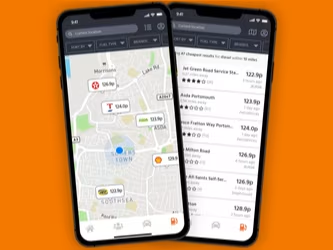
Before you fill up, use a free online tool like PetrolPrices to find the cheapest petrol and diesel near you. Simply enter a postcode, town or city, how far you're willing to travel and the type of fuel you want, and it'll list the cheapest forecourts in the area in seconds.
As well as prices reported directly by retailers and users, it uses data from the Government's 'Fuel Finder' service, which requires forecourts to update prices in near real time. This service isn't designed for motorists to use directly, but aims to make third-party apps and websites more accurate.For more ways to save on fuel, motor over to our Cheap petrol & diesel guide.
-
How to charge electric cars for free across the UK
Use the handy online tool Zapmap (also available as an app for Android and iOS devices) to locate free electric vehicle charging points across the country.
On its map, go to the 'Filters' tab, then select 'Payment', then 'Free to use' and 'Apply' to see those which have been marked as free. Zapmap says that, as of May 2025, there were over 1,800 free charging points around the UK, many at hotels, car dealerships, car parks and supermarkets, though the number has sharply declined in recent years.
For more info on charging electric cars, including how to find your nearest charging point and home vs public charging costs, see our Electric vehicles guide.
-
Check your driving licence is valid or risk a £1,000 fine
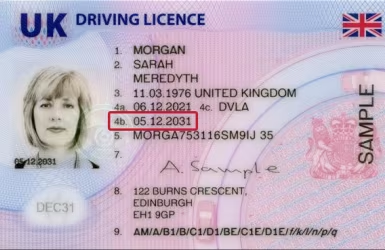
Photocard licences were introduced in 1998, and need to be renewed every 10 years. According to Driver and Vehicle Licensing Agency (DVLA) data obtained by Co-op Insurance, almost 2.7 million photocards are due to expire this year – so check yours now.
Driving licence photos must be replaced every 10 years – no matter how young you think you look
You can be fined up to £1,000 if you drive while your photocard's expired. It costs £14 to renew online, £17 by post or £21.50 at a post office – an annoying cost, but far more MoneySaving than the alternative.
For full info on what to check and how to renew, see our How do I renew my driving licence? guide.
-
DON'T risk losing your car. Is it one of 498,000 untaxed vehicles?
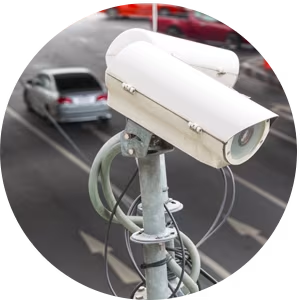
Paper tax discs were scrapped in 2014. But while you no longer need to display one, you DO still have to tax your vehicle. If you don't, you could face a fine of £1,000 or five times the amount of tax owed, whichever is more.
What's more, your car could be clamped, in which case you'll be charged a £100 release fee, or even impounded – then you'll be charged a £200 release fee, plus £21 a day until you pay it.The number of untaxed vehicles on the road has increased since paper discs were abolished, with Department for Transport (DfT) figures from 2023, the most recent available, showing there to be 498,000 (down from from 719,000 in 2019, though due to a change in methodology the DfT says the latest data shouldn't be compared to that of previous years). This is despite the police deploying cameras with number plate recognition technology to spot those untaxed.
How to check you've paid your vehicle tax
Vehicle tax is recorded online. To check if your vehicle – or anyone else's – is taxed, go to the Gov.uk website and enter the registration number.
Paying annually is cheapest, and with direct debit you won't forget to renew
Vehicle tax renewal usually costs £200 a year for cars registered on or after 1 April 2017, including electric cars, which are no longer exempt (some higher-value vehicles pay more). It costs £20-£790 a year for those registered between 1 March 2001 and 31 March 2017, and £230-£375 for cars registered before 1 March 2001. How much it costs depends on your vehicle's age and value, its CO2 emissions and your personal circumstances (see full list of rates).
Payments can be made via the Gov.uk website or at post office branches. Here are your options:
- You can pay by annual direct debit. Or for a 5% surcharge, you can pay by six-monthly or monthly direct debit.
- You can make a one-off payment instead. This can be for the year – or for a 5% surcharge, for six months. If you do this, make sure you renew on time.
Even if your vehicle's tax-exempt, you still have to apply
If you have a disability exemption, a disabled passenger vehicle, vehicle made before 1 January 1986, mobility vehicle, powered wheelchair, mowing machine, steam vehicle or one used for agriculture, horticulture or forestry, you pay zero vehicle tax. Yet bizarrely you do still have to apply for it. Electric cars are no longer exempt. For full info, see the Gov.uk website.
Beware Google when renewing your tax disc. Search for 'tax disc' or 'pay vehicle tax' on Google and you risk being duped into paying a copycat site.
These firms appear on search engines dressed up as official agencies. They let you unnecessarily fill in vehicle tax applications through them, slipping in their own hefty charges on top – sometimes up to £100 extra.
Always renew via the official Gov.uk page. Copycat sites try to catch people out for driving licences and theory tests too – more info in Copycat websites.
-
Use hidden MOT centres for fewer fails
Regular MOTs are a must for any vehicle. Their maximum cost is fixed at £54.85 for cars and £29.65 for motorbikes (though you can often find cheaper). Yet it's not the test fee but repairing the fails which often makes the biggest dent.
Little-known council-run MOT centres generally don't do repairs, so they've no vested interest in failing you.
Thousands report a massive difference. Here's one MoneySaver's story:
My usual garage said to make it pass its MOT, repairs would cost almost £1,000. Following the article, I took it to the council test centre instead and it passed without any work needed.
For a list of council test centres that could give your vehicle the best chance of passing without having to shell out for unnecessary work, see our guide to Cheap MOTs.
The MOT rules changed in 2018. Since May 2018, if a 'dangerous' fault – for instance, insufficient tyre tread or contaminated brake fluid – is found when your car is being tested, you won't be able to drive it away until it's been fixed. If you go to a council test centre which doesn't do repairs, your only option will be to have it towed. For full info, see MOT rule changes.
-
Don't buy premium fuels for standard cars
Many filling stations sell 'premium' fuels, such as super unleaded, which is designed for vehicles that need higher-octane fuel, like high-performance cars. It's unlikely to make any noticeable difference to the performance of most cars, according to the RAC, so for an easy saving, don't fill up with it unless you know your car needs it.
The AA says you should always use the fuel specified by your car's manufacturer. While some premium fuels contain additional detergents that can help control deposits in the fuel system and combustion chamber, using one doesn't remove the need for regular servicing and maintenance.
-
Young drivers can save £1,000s on insurance with specialist policies

Finding affordable young drivers' car insurance can be a nightmare – the average annual premium for a driver aged 17 to 20 is now over £1,800 a year, according to price comparison website Confused.com. But there are some ways to save.
For step-by-step tips to slice off every penny you can, see our Young driver insurance guide. But here are a couple of key points:
Consider black box insurance. Black box policies, also known as 'telematics', are worth checking out. With these, a black box or smart box device is fitted to your car and monitors your speed, acceleration, braking, when you drive and more. If the insurer thinks you're a safe driver, it may offer you a lower premium at renewal, which can be particularly valuable for young drivers – see Black box insurance.
Learner driver insurance can work out cheaper. Learners are often added to a family member's or friend's car insurance as an additional driver so they can practise. This can up the cost, and put the principal driver's no-claims bonus at risk. Consider getting a specific policy just for the provisional driver instead – see Learner driver insurance.
-
Haggle on breakdown cover at renewal
On expiry, DO NOT just accept the renewal price for breakdown cover. Many firms give highly-inflated quotes that are easily beatable by asking for a deal similar to those offered to new customers.
Haggling success rates are huge – 91% RAC customers and 90% of AA customers who tried to haggle were successful, according to our January 2026 poll.
For top tips on how to do it, see our guide to Breakdown cover haggling.
-
Save on fuel by changing your driving habits

It's possible to drive the same distance in the same time using much less fuel – without cutting your top speed. In the process, you could cut your petrol or diesel costs.
Here are a few pointers to get you started. See our drive more efficiently tips for more:
Accelerate gradually without over-revving. Press harder on the pedal and more fuel flows. Get to the same speed using less power. As a very rough rule, stay under 3,000 revs.
Drive in the correct gear. Always drive in the highest gear possible without labouring the engine.
Slow naturally. Rather than brake frequently, let your car slow naturally where you can and use its stored momentum.
Think about road position. To do all this takes road awareness. The more alert you are, the better you can plan ahead and move gradually.
-
Do a pre-MOT check to beat common fails

A third of cars, vans and small passenger vehicles fail their MOT test first time, and many for simple, avoidable reasons. Often finding these problems is a question of common sense, not mechanical know-how.
Some fails you can fix yourself, others will need a professional. Either way, sorting it pre-test is usually cheaper. Here are the main points to check according to the Driver and Vehicle Standards Agency (DVSA). For more, see our DIY MOT checks.
Are all lights fully working? Over a quarter fail MOTs due to a lights, reflectors and indicators. Have someone sit in the car when it's dark while you walk around checking every light: front, rear, headlights, dipped headlights, hazards and indicators. If you need a new bulb, buy one for a few quid and replace it.
Check suspension. While a full suspension check's difficult, to see if the shock absorbers have gone, quickly apply your weight to each corner of the car, then release. It should quickly settle back. If not, it's possibly a shock problem.
Is there tension on the handbrake? This is tricky to fix unless you know what you're doing, so you'll likely need a mechanic. If your brakes feel loose and unresponsive, or the handbrake slides up without resistance and can't be put at a set level, it's likely there's a problem.
-
A third of those who fight unfair public parking tickets win

Getting an unfair parking ticket from a public body, such as a council or the police, is a sting in the tailpipe.
But if you've got a good case, it's worth fighting it. In England (excluding London) and Wales in 2025/26, the independent Traffic Penalty Tribunal allowed around a third of the 21,500 appeals it determined.
If you decide to challenge your ticket, first you'll need to do so with the body that issued it. If that fails, then you can appeal to the relevant independent adjudicator. For step-by-step help, see our Fight unfair public parking tickets guide.
If your car's been clamped or towed by a council or the police, and you think it's been done unfairly, you can also appeal – see our Fight unfair clamping guide. -
You can claim for repairs if you hit a pothole
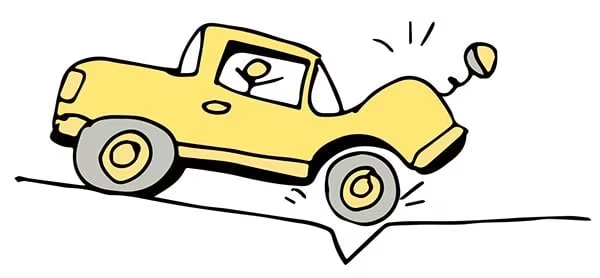
There are at least one million potholes across the UK, the RAC has estimated. If your car's been damaged by one, you may be able to claim back the cost of your repairs. If you're thinking about claiming, there are a few things you need to know.
Firstly, it's not an easy process and can take a while. When you start you must prove it was the pothole wot dunnit, as just saying your car was damaged isn't enough – you'll need to get a mechanic to vouch for this as well as gather evidence, such as measuring and taking photos of the pothole.
Secondly, you can only claim if the authority responsible for maintaining the road didn't carry out the checks or repairs that it should have. Get step-by-step help including free template letters in our Pothole claims guide.
-
Car insurance is a must – even if not driving

It's a common misconception that cars don't need insurance when not driven. But legally, cars must be insured unless they've been declared off-the-road with a Statutory Off Road Notification (SORN) or they've been untaxed and without a SORN since before 31 January 1998.
The Continuous Insurance Enforcement scheme came into effect in June 2011, stating all cars must be insured even if no one drives them. The rules are designed to clamp down on uninsured drivers. Break 'em and there's a fine followed by clamping, seizure or having the car destroyed (though warning letters come first).
Even if you let cover lapse during holidays or hospital stays, you're breaking the law.
The only way out's to apply for a SORN, which declares the car will never be driven. To apply, see the Gov.uk website.
-
Driving for the first time in a while? What to check beforehand according to the AA and Green Flag
If you've not used your car in a while, these are the most important things the AA and Green Flag have told us you should check before driving again:
-
Brakes – If your handbrake/parking brake hasn't been released since you last drove, it may stay locked when you first release it. Drive off gently and it should free itself, though you might hear a loud clunk from one of the wheels. Apply the brakes when you first drive off too – they may sound noisy if rust has built up on the discs, but this should clear after you use them a few times.
-
Fluids – Before starting the engine, check all fluid levels, including brake fluid, coolant, engine oil, power-steering fluid and screenwash.
-
MOT – If your MOT has expired, book a test as usual and don't drive again until you're taking your car to the test centre. Not sure if it's due? Use the simple Gov.uk MOT check tool – all you need to is your registration number. Full info on cutting the cost in Cheap MOTs.
-
Tyres – If you've not been keeping them inflated to the correct pressure while you've been off the road, check the pressure and inflate accordingly before you head out.
-
Vehicle tax – Check your car is taxed or risk a fine of up to £1,000. If you have declared it as being off the road by getting a SORN (statutory off-road notification), you'll need to renew your vehicle tax. For full info, see paying vehicle tax.
-
And finally... check nothing's living under the bonnet – Before starting your car after a lay-up, the AA says you should pop the bonnet and make sure that nothing has nested in your engine and/or chewed through any pipes or hoses.
-
-
Driving in Europe? Check if you need an emissions sticker to avoid a £70+ fine
If you're planning to drive in major cities in Europe, including Paris, Berlin, Marseille and Munich, as well as some smaller towns, you're likely to need an emissions sticker to avoid risking a £70+ fine.
Several countries on the continent require you to do this to drive through certain cities at certain times, in order to curb pollution. If you have an older car it could be banned altogether at certain times.
In some cases you'll have to order a sticker before you leave the UK, so check what you need and see full details of how to get one in our Driving in Europe guide.
Warning. Don't get caught out by copycat sites when buying emissions stickers - we've seen third-party sites selling them at more than FIVE TIMES the going rate.
-
Lock in today's car insurance prices to beat further hikes – even if you're not at renewal

Even if your policy isn't up yet, check now to see if you can slash costs and lock in today's prices.
Comparison sites zip your details to a host of insurers' and brokers' websites, scraping their data to report back the cheapest. We've full help on getting quotes from multiple comparison sites in our Cheap car insurance guide, or to get quotes at speed, try the new MSE Compare+ Car Insurance tool.
Next, check the policy details of your top quote, so you know exactly what you are and aren't covered for if you need to make a claim, and then see if cashback comparison sites can do better. The record is 96p for a year's cover via a cashback site – let us know if you beat it.
How to save even if not at renewal
While the above works well for those at renewal, it's worth checking if you can save £100s now even if you're mid-policy and have several months left.
If you can find a deal cheaper than your current one – and if you auto-renewed last time that's likely – then, provided you've not claimed, for a £50ish admin fee (check with your insurer), you can usually cancel and get the rest of the year refunded, though you won't earn that year's no-claims bonus. See our help on switching if not at renewal.
-
Prep your car for the cold months

Breakdowns are more common in winter, so it's worth being prepared.
While our Cheap breakdown cover guide has full info on the cheapest policies, preventing a breakdown in the first place is better than having to wait to be rescued.
Here are six tips to prep your car before any cold weather sets in...
Buy antifreeze and a screen-scraper. Antifreeze stops your car's coolant from freezing so it can keep your car's engine working, while a screen-scraper is useful for clearing your windscreen (a de-icer will also make the job quicker).
Make sure your lights are working. Scan your lights and check them regularly to make sure they're working properly so you can be seen in bad weather.
Check your tyres. The AA recommends a tyre tread of at least 3mm for winter driving – more info on how to check this at TyreSafe.
Stop doors sticking with Vaseline. A thin coat of furniture polish or Vaseline on rubber door seals should stop them sticking.
Make sure your car is stocked up with essentials. For example, a torch and spare batteries, first aid kit, warm blanket, mobile phone charger, shovel, road atlas and jump start cables.
Check your battery. A faulty battery is one of the most common causes of cars breaking down in winter. It needs to be regularly checked and might need charging if it's not been used in a while.
For more info on winter driving and year-round essentials to have in your car, see the AA's winter driving advice and the RAC's cold weather driving guide.
-
Only drive occasionally? Consider joining a car club

If you only use your car a couple of times a month, it might be worth flogging your wheels and joining a car club, which can be MoneySaving and PlanetSaving.
These clubs can be a cost-effective way to drive, as they remove your insurance, fuel, breakdown and maintenance costs. The fees can add up, however, as firms often charge annual or monthly membership fees, plus a hire fee each time you want to use a car. Some also charge extra fees per mile you drive.
As a rule of thumb, car clubs are best for those who use them infrequently, and make short journeys each time.
Some of the car clubs operating in the UK are listed below. The basic concept is similar with each – sign up and you can reserve one of a number of cars dotted around your city in special parking spots. Usually you'll need to return the car to the same spot, but some sites also offer one-way rentals.
Warning: We've not had a lot of feedback on car clubs, so be sure to read all the T&Cs, and check you're happy with the level of cover, before deciding whether to try one. Please let us know about your experiences (good or bad) in the MSE Forum or via successes@moneysavingexpert.com.
Below are some of the more popular car clubs in the UK (if you're wondering why the once-popular Zipcar is absent, it's because they ceased their UK operations at the end of 2025).
You can also use the map on Como.org.uk to see the locations of cars from various car clubs (though when we checked, the map didn't completely reflect all the cars available, so always check directly on the club's site as well).
-
Enterprise Car Club – available in 240+ towns and cities across the UK. Prices vary by location and there are four price plans to choose from – one aimed at casual users, one at medium-frequent users, one at frequent users and one at those aged 19-21. A standard user will pay a £60 annual fee (or £7 a month), and can then hire cars from £8 an hour, paying 25p/mile per mile driven (14p for electric vehicles, 30p for vans).
-
Hiyacar – peer-to-peer car hire available in most major cities in the UK, with a focus on local car sharing. Prices vary by location and by car owner. While it claims prices start from £3 an hour, once you factor in the fairly high fees, it's more like £12 an hour or £100 a day minimum. For £6.99/month, you can get extra benefits such as discounted booking fees the more you use the service, an increased 500 mile daily limit, and more flexible booking options.
-
Turo – peer-to-peer car hire platform operating across much of the UK. Prices vary widely based on the car, location and demand, but can start from around £50 a day for smaller or older models with the basic level of cover. Fuel isn't included unless you pay extra, and there is no hourly option.
Car club advantages
-
Clear costs. You'll instantly know how much hiring a car will set you back, while the price of running your own car can spring unexpected costs on you.
-
Cut car usage. With car clubs you consider if a trip's really necessary, given there's a fee per journey. After all, it's much easier to jump in your own car without thinking than to plan, book and pay a lump sum.
-
Get rid of extra costs. No more maintenance, depreciation, tax or insurance.
-
Flexibility. Unlike standard car hire, car-club cars are generally available around the clock.
-
Grab extra loyalty points. MSE forumites suggest using your own loyalty cards when filling up the car to nab extra reward points.
What to watch out for
-
Costs quickly add up. Forumites report it's only MoneySaving if you need a car infrequently (perhaps a couple of times a month). The cheapest advertised rates may only be for a small number of cars, so factor this in.
-
You must be organised to make it viable. You'll need to plan journeys in advance, mainly take short round-trips, and live where there's decent public transport. Cars can quickly get booked up at weekends and on bank holidays.
-
You need to be near a car. How suitable it'll be depends on where you live. If you need to travel a long way to pick the car up, it may not be worth it.
-
Beware fees. Returning cars promptly is harder in congested areas, and a few minutes of being stuck in traffic may incur a nasty late-return fee. Forumites say it can be worth booking extra time if you're often late. You can also be charged for damage, cleaning, returning the car with low fuel and admin fees if you receive a ticket (on top of the ticket charge). So check before you book.
-
Consider excess insurance. As with standard car hire, insurance is included with your booking but you'll still have to pay a hefty excess fee if the car is damaged. Car clubs offer the option to reduce your excess for an extra fee, but check if you can save with a standalone policy for as little as £2 a day – though it's worth double-checking it will cover car clubs first.
-
Take photos before and after. To avoid any nasty fees for damage that wasn't your fault, make sure you check it carefully before and after using the car, and take photos to show the condition it's in. Report any issues before driving away.
-
Watch out for extra mileage charges. These can kick in after about 50 miles, so always check. Many Forumites report these can make it cheaper to hire a car the conventional way, so consider this too – see our Cheap car hire guide.
-
Beware pricing and term changes. Check statements to ensure they're correct, and check if congestion charges are included, if applicable.
-
-
Driving abroad: Is your UK licence valid?

Before the UK left the European Union on 31 January 2020, a UK driving licence was accepted in all EU countries, as well as Iceland, Liechtenstein, Norway and Switzerland, and that remained the case during the transition period that ended on 31 December 2020.
The Government had warned UK citizens might need an international driving permit (IDP) to do so after that, but following the agreement of a post-Brexit trade deal, the Department for Transport told us that in most cases you don't need an IDP. For full info, head to our Driving licence guide.
While in most cases you don't need an IDP to drive in Europe, if you're planning a trip further afield, you should check if you'll need one. For full details, see Check if you need an extra permit, but here's the key info:
An IDP is required or recommended in over 140 countries, including Australia, India, Thailand and the USA. Drive without one where it's needed and you risk trouble with the authorities, and may be refused a hire car.
It's in booklet format and there are three types, known as the 1926 Convention, 1949 Convention and 1968 Conventions – which one you'll need depends on where you're off to. They cost £5.50 and are available in-person from participating PayPoint stores.
Beware copycat websites selling 'international driving licences' – these aren't legally recognised, so don't get caught out.
And if you're taking your own vehicle to an EU or European Economic Area (EEA) country (or Andorra, Bosnia and Herzegovina, Serbia or Switzerland), you no longer need an insurance 'green card'.
The requirement for this international certificate, which guarantees the bearer has third-party cover, had been in place since 31 December 2020, but was scrapped on 2 August 2021. For more info, see Driving in Europe.
-
Halve hire costs in minutes
Holiday car hire can save a hefty whack on taxis to and from the airport, and can be invaluable if you're on a family getaway. If you're definitely going to need it (see below for alternatives), make sure you book the right way.
Find full details of current deals and tips 'n' tricks in the Cheap car hire guide. Here are the key points:
-
Define your requirements. There's often a mass of costly add-ons on offer, such as air con, sat-navs and extra drivers. Before you book, work out what you need and ditch the rest (this is especially important when choosing fuel policy).
-
Quickly compare quotes. Next, take the legwork out of your search by using the right comparison sites to grab the most quotes in the least time. Our top picks are Skyscanner*, Kayak*, TravelSupermarket* and CarRentals*.
-
Check for extra discounts. See if you can squash the price further via fly-drive package deals, cashback, specialist travel brokers and online vouchers.
-
Get the cheapest excess insurance. At pick-up, hire firms will try to flog 'excess insurance' – but it's possible to do it for less than half the cost, via comparison site MoneyMaxim* and checking for special discounts.
-
-
Declutter your car to cut fuel costs

Fuel price rises can be a painful addition to motoring costs. But some basic maintenance can help put the brakes on your fuel bill. Here are some tips to get you started:
Keep your tyres inflated. Lower tyre pressure increases the drag on a car meaning you need more fuel, so regularly check the pressures are correct.
Declutter your car. The lighter your car is, the less effort it needs to accelerate. So declutter: clear junk from the boot, and ditch unnecessary weight.
Take your roof rack off. A roof rack adds massive wind resistance, increasing drag and making the engine work harder. Don't need it? Remove it.
Turn off air conditioning at lower speeds. Air con uses a lot of fuel, so turn it off unless you really need it. The general consensus is it's more efficient to drive with the windows down and the air con off at lower speeds, but at higher speeds it's better to use the air con and keep windows up due to the extra drag caused.
Don't fill it up. Fuel's heavy, so by filling up you're adding weight. The less fuel your car holds, the more efficiently it drives. Filling up slightly more often and putting less in (half or three-quarters full) will make it more efficient.
Thanks to the RAC for its help with this list. See Make your car more fuel-efficient for more.
-
Smoking in the car with under-18s could land you with a £50 fine
If you're a smoker, then you need to be aware of the law. Since October 2015, anyone in England and Wales, whether a driver or passenger, who smokes in a private vehicle with someone aged 17 or under inside could face a fine.
If caught, the person smoking faces a £50 fine – and if they're a passenger, the driver will be fined £50 too. This is quite apart from the fact smoking is both extremely unhealthy and mega expensive.
This also applies to caravans, motorhomes and campervans when they're being used as a vehicle with the engine on, but not when they're being used as accommodation.
The Scottish Government brought in a similar law in December 2016, which means drivers can be fined £100, and Northern Ireland Assembly members have also voted to introduce a ban, although there is no set start date yet.
Quick questions
What if I am 16 or 17?
You can smoke if you're 16 (though you can only buy cigarettes if you're at least 18). If you're under 18 and driving alone, you won't be fined for smoking. If driving with others aged 17 or under, you'll be fined.
If you're a passenger under 18 and you're smoking, both you and the driver could be fined (even if the driver’s also under 18).What if the windows are open?
It doesn't matter. The law applies even if you have the windows open, the sunroof open, the air conditioning on, whatever.
What if I'm in a convertible?
You are exempt from these rules if the top is down and fully reclined.
What if the engine is off?
Even if the engine is off and the doors are open, you could still be fined.
-
Grab fuel vouchers with your weekly shop

Supermarkets often run petrol promotions. As their forecourts are usually cheap for fuel (always check though), these schemes mean you can make some decent savings.
The offers are usually something like 'spend £50 and get a 5p off a litre voucher'. Recent offers have also included 10p off a litre via a single voucher with a £50 spend.
Keep an eye on Cheap petrol & diesel for fuel promotions and info on using supermarket loyalty schemes. The best petrol & diesel deals are always in the free weekly Money Tips Email, so sign up to hear about them first.
-
Get car parts yourself
If you don't mind putting in the legwork, it's possible to make hefty savings on parts by sourcing them yourself. Before getting your motor repaired, ask for separate quotes for fitting and parts, and check if they'd mind just fitting the part if you can find it.
Get the exact details, including name, type and size, and see if you can buy it yourself for less. Forumites recommend eBay* for cheap car parts, as well as calling suppliers and factories and comparing prices online – the car and motorbike sections of Amazon.co.uk are worth a look. Here are a few forum success stories for inspiration:
My 2001 Ford Focus only came with one working remote key. I bought two fobs from eBay for £20 each and got a locksmith to supply and cut new blades and programme the remotes. Total cost was £140 for two new keys, as opposed to £200+ quoted from a Ford dealer.
My car needs new CV joints. Quote including labour is £945.41. After my eyes stopped watering, I told them I'd get back to them after I'd had a look for a better price. I've just gone to a local independent and got a quote of £150-180 all in. I'll be saving nearly £800.
Is your car still under warranty? If so, the AA's told us in most cases repairs will be carried out for free. But if you choose to have the car serviced outside the dealer network, the garage must use parts that match the original specification to avoid invalidating the warranty.
-
Add a second driver to cut insurance costs
If you're considered high-risk, adding a second driver to the insurance – even if they won't use the car often – can smooth out the average risk and reduce the cost.
Those with a record for driving well are likely to help make bigger savings (so if your friend's driving is more Mr T than Driving Miss Daisy, this probably won't work), but adding anyone that's in a lower risk category can help. It won't work every time, but it's worth checking.
Warning! Don't confuse this with 'fronting', which is illegal. Never add your name as main driver on someone else's car, such as one of your kids'. This is called 'fronting' and it's fraud. When you claim, this'll often be checked out and the insurance will be invalid if you're caught. It can also lead to prosecution. Don't do it.
-
Earn up to 5% cashback on petrol and diesel
Buying fuel is one of the biggest regular expenditures for most people, whether using a card or cash. But there's a nifty way to save every time you fill up.
Cashback cards pay you a percentage back whenever you spend on them, which can quickly add up. You get 5% introductory cashback on all spending – including on petrol and diesel – up to £2,500 (so max £125 cashback) with the American Express Platinum Cashback Everyday credit card.
After the introductory period the cashback is tiered: if you spend up to £10,000 you get 0.5% cashback, and all spending over £10,000 earns 1% cashback. You must spend at least £3,000 on the card in a year or you will get NO cashback.
Make sure you repay IN FULL each month, or you'll pay interest at 30.4% representative APR. For your chances of being accepted, use our Credit Card Eligibility Calculator, and for full details and more options, see our Credit card rewards guide.
For more ways to save on fuel, check out our guide to Cheap petrol & diesel.
-
Learn to dodge parking tickets

Ever wondered what 'blip' markings on kerbs mean, or if a quick trip to get change is allowed? These are just some of the key points in the How to park right guide.
Parking tickets aren't just irritating - they're hideously expensive. Plus, they may take months to reverse, so arm yourself with the mythbusting Five parking facts everyone should know (if you know others who often get ticketed, pass 'em on):
There's no standard 'single yellow' parking restriction. You can sometimes park on a single red or yellow line, but there aren't standardised times. Always check the road signs.
Watch your wheels. Ensure your car's completely within any defined spot, such as a residents' or pay-and-display bay. If one wheel's outside, you risk a ticket.
Proudly display your permit or ticket. If you've a special permit (such as a residents' or disabled permit), a warden must be able to clearly read it otherwise you'll often get a ticket. The same goes for pay-and-display tickets.
Bank holiday rules vary by council. Many wrongly assume they can park anywhere on bank hols. Some councils allow parking in residents' bays or on a yellow line, others won't. There's no hard and fast rule; if unsure, don't do it.
Beware EVERYTHING in private car parks. Rules change on private land or in private car parks – whether at supermarkets, hospitals or elsewhere. You can be asked to pay huge amounts without reason, so check signs and be cautious.
-
Dodge pricey service stations by using off-motorway alternatives
As they've a captive audience, motorway services are rarely MoneySaving. Knowing drivers are unlikely to leave the motorway, they often charge a premium for food, drink, fuel, accommodation and even parking.
For example, we've spotted unleaded costing 25p a litre more than the UK average. But it can be even worse – former MSE Jo once paid almost £9 for a 24-pack of nappies which at the time usually cost around £5.
JustOffJunction can point you in the right direction
However, by using the handy website JustOffJunction, you can seek lower prices by going off-piste. It lists over 5,000 places to eat, rehydrate, sleep and refuel that are just off motorways, where they're likely to be cheaper. You can search by motorway and junction to see what options are available on your journey.
While we've only been able to check a small selection of the recommendations, those we have are up-to-date. Unfortunately it doesn't give an indication of prices, so you'll need to do your own research to ensure you can save.
JustOffJunction's a little clunky, and therefore can be a bit tricky to use on a smartphone, so may be best used on a tablet or laptop before you set off. If you've any feedback on it, please let us know via the MSE Forum.
-
Make cash from your driveway
If you live in a city, near an airport or train station, or anywhere where parking's pricey, your driveway might just be paved with gold. Rent out a parking space and you could make £200 a month or more.
Here's a quick tip, but you can find more, plus a list of the big parking sites to try and what to watch out for, in the Rent out your parking space guide.
Quickly find what yours is worth. To get an idea of what you might be able to make, clever online tools can give quick estimates. You can see what those nearby are charging for long-term stays (such as a month) with ParkLet's price guide tool.
-
Private parking firms CAN'T fine you
Parking tickets from supermarkets, hospitals and other private car parks do better impressions than Jon Culshaw. They're often dressed up like fines, and can be called Parking Charge Notices to mimic Penalty Charge Notices from public bodies, like a council or the police. DON'T be fooled – they're not.
If a private parking ticket's slapped on your windscreen and you think it's unfair (for example, you were trying to pay or there was no signage), there are ways you can challenge it.
If your challenge is unsuccessful, with some of the biggest firms you can appeal to one of two independent bodies. A huge 51% of the 107,000 cases that completed the process with one of them, Parking on Private Land Appeals (Popla), between 1 October 2024 and 30 September 2025, resulted in the charge being cancelled.
Full info in our Fight unfair private parking tickets guide.
-
How to check if your tyres are safe
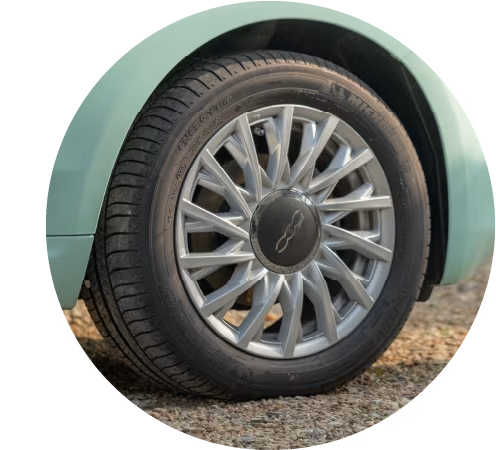
New tyres can be pricey, but it's essential to make sure you keep them above the 1.6mm legal minimum tread depth so surface water can slip through.
To measure, use the quick 20p tyre test detailed on the TyreSafe website. Pop a 20p coin on its edge into the main grooves of the tyre tread. If the outer rim of the coin is hidden, your tyres are legal. If you can see it, get them changed.
-
Haggle down the cost of tyres
Don't just go for the first quote you get. You can make big savings by ringing round local garages for the cheapest quote on the ones you want, then see if you can lower the price further by haggling it down.
This can make a big difference to the price, particularly if you're replacing more than one tyre. Here's a success story from the forums for inspiration:
I rang around and then asked Kwik Fit to price match – got my two tyres down from £165 per tyre to £128 fitted, tracked and balanced.
Give it a try. See Haggle on the High Street for tips, and report your successes on the Cheap Tyres discussion.
Can I save buying online?
As well as haggling, you can also save on tyres by putting in some leg work online. It's not for everyone, but if you're happy you understand the measurements you could give this a try.
-
Online tyre prices. Buying and fitting new tyres in a garage is less hassle but may cost you more. It's often cheaper to buy tyres online.Tyre-shopper.co.uk and Blackcircles.com are liked by MoneySavers but always check a few websites before parting with your cash. Tyrequote.com compares prices and local garages, and is a good tool for researching the market.
Enter the tyre width, diameter and load rating (from the car's manufacturer handbook) to work out the cost. This is more accurate than relying on automatic results from your registration number. -
Delivery. Remember to factor in the price of getting the tyres delivered, fitted and balanced at a garage.
-
Tyre quality. Before you buy, check the quality of the tyre on a website such as Tyrereviews.co.uk. It lists all published tyre tests and will give you a good idea of how the tyres you're buying stack up.
Should I get premium tyres? The AA's told us a driver changing all four tyres for AA-grade tyres, doing 9,000 miles a year with a fuel consumption of 30mpg, could save about £130 on fuel a year. However, as AA-grade tyres are generally pricier, weigh up any extra cost carefully before shelling out.
-
-
Swap Clubcard points for cheap RAC cover
If you're a Tesco shopper, hoard your Clubcard points and you can use them to get cheaper breakdown cover.
How does it work? Spend Tesco Clubcard vouchers on goods or services listed in its Clubcard Reward Partners brochure and you get back two times their face value.
Which policies can I get? One of the deals offered is an RAC roadside recovery policy, meaning you can sometimes get it at about half of the high street cost. Not all the usual packages are available – see what's on offer in top-pick breakdown cover.
-
Protect your no-claims bonus

For every year you don't claim on your insurance you get a discount, which can make a big difference to costs. If you claim, you usually lose two years off this discount – a deliberate tactic to encourage you not to claim.
You can get a protected no-claims discount so claims don't impact the discount. Some insurers, such as Elephant, also offer an accelerated no-claims bonus, such as giving a year's bonus after 10 months. See Should I protect my no-claims bonus?
Beware price rises. Remember, if you have an accident, even if you don't claim, you should report it to keep your no-claims discount. Otherwise you risk invalidating your insurance.
As a result, the price of the policy can still rise. Having a discount is one thing, but if you're seen as more of a risk (which happens when you have an accident) the price is still likely to rise, because this is a separate calculation insurers make when determining costs.
-
Tweak your job title for cheaper cover
When it comes to insurance quotes, tweaking a job title could save serious cash. Insurers base prices on risk assessments, and your occupation plays an important part.
This isn't about claiming you're a lollipop lady when you work as a stunt driver. But done responsibly, this can really help to lower your policy cost.
When considering using a different job title, imagine how a reasonable person would describe what you do for a living.
To help, we've built a fun Car Insurance Job Picker tool to show the riskiest jobs and see if small tweaks to your job description could save cash. For example, someone paying £500 a year for car insurance listed as 'builder' could knock off around £30 by tweaking it to 'contractor'.
Here's a success story from MoneySaver @fabsternation on Twitter for inspiration:
I did this too thanks to @MartinSLewis from creative director to marketing manager = saved £300+ Crazy world isn't it?
Shockingly, way back in 2012, we found that those listed as unemployed are sometimes charged over five times more for their insurance than those in work. See the full MSE investigation.
-
Don't be tempted to lie when getting car cover
With insurance, remember the golden rule:
Tell them the truth, the whole truth and nothing but the truth.
If you've read these tips and thought, "It's easy to lie", you're right. Yet lying on your insurance form is fraud. It can lead to your insurance being invalid and, in the worst case, a criminal prosecution for driving without insurance. Don't do it.
-
Even if parking for free, there are catches

In rural or suburban areas, you can usually park for free outside busy parts of town where there are no road markings, but you can't just park anywhere that's unmarked.
Here are some basic rules to remember:
Avoid parking near the top of a hill, as you may not be seen by approaching vehicles.
Never park on a bend, for the same reasons.
Make sure you're not on a clearway or red route. If you can't see a sign, or weren't looking for one, this generally means you can't park on busy roads. Stick with residential streets, or those where a lot of other cars are parked.
Don't park within 10 metres of a junction.
Don't park where the kerb's been lowered to allow vehicles to access a driveway, gateway or other opening.
-
Time your MOT right

Whether you've a banger or a Bentley, your car needs an MOT when it's three years old (four years in NI), then once a year after. But timing is crucial.
Get a test in the month before the current certificate ends – the new one will expire exactly a year from the original's end date (the earliest you can do this is printed on your current certificate).
But get it tested more than a month before the MOT's due and it'll expire exactly a year later, meaning you lose out.
Always book tests in advance if your certificate's run out. If your car's out of certification, you can drive it to the test centre provided the test's been booked. Plus, if it fails the test, to get the problems fixed you're allowed to drive it from the test station to a repair centre. However, the vehicle still must meet a certain standard of roadworthiness, otherwise you can be fined. See the Cheap MOTs guide for more.
To get a reminder one month before your test's due, use the free Gov.uk MOT reminders tool.
-
Grab breakdown cover from £57 a year

Whether you've a flashy new convertible or a trusty old banger, there's no need to pay £100s for breakdown cover. For the latest cashback deals and top-pick roadside recovery policies, see top-pick breakdown cover deals.
You'll also find full info on the different types of policies available to help you choose the right cover, as well as specialist policies, safety tips and more.
Know where to look and you can get full-service cover from as little as £57 a year, or basic cover from the AA or RAC for £80 to £90 a year after cashback.
-
Buying a motor? Slash the cost of financing it
If you're in the market for a set of wheels, first check out our Best way to buy a new or used car guide.
Whether it's a new or used runaround, saving up for it is best. Yet if you need to borrow, plan a budget to ensure affordable repayments, don't overcommit and do it the cheapest way. For help, see our Cheap personal car loans guide.
What about Personal Contract Purchase (PCP), leasing and more? These dealer-based finance options can work out well – for a full how-to, see Cheap car leasing, Cheap hire purchase and Cheap PCP.
-
Driving in Europe? Check insurance, breakdown and road rules

Don't assume you're covered if you're taking your car to the Continent. Make sure you set off fully prepared.
We have a full guide to Driving in Europe, with all the key things to check, including equipment, insurance, breakdown cover, speed limits, emissions stickers and more.
-
Snaffle hidden airport parking discounts
It's often said airports make more from parking and shopping than flights. Leave the car at one without booking first and you risk sky-high rates, but a quick comparison can nearly halve the cost.
The Cheap airport parking guide has full listings of the latest discounts which can help to hammer down your quote. It also has forum discussions for each airport to help uncover hidden local discounts.
Don't just turn up at the airport. Booking first, even on the day of your flight, could save money.
-
Consider car hire alternatives

Before you book car hire, consider the alternatives. Unnecessary car hire can be an expensive, unused hindrance. Car swaps, public transport or taking your own car can work out cheaper, depending on where you're going.
Go through this checklist first:
What's the public transport like? In Miami or Los Angeles, most people need a car to traverse the huge city distances. But in New York you can't park anywhere, so the subway wins. Many European cities have great public transport links too, so a little research goes a long way.
How much are taxis? Sometimes car hire's cheaper than just one taxi. A taxi from Malaga airport to Marbella's about £60 to £80 each way, though you may be able to find car hire for less. So even if you don't use it again, it wins. Use international taxi fare calculator Holiday Taxis for a benchmark price.
Can you take your own car? If you're off to Europe, this may be an option. All UK car insurance policies automatically provide the minimum cover required by law in the EU, but check if full cover extends to Europe so you know whether you have complete protection. It can be cheap to get EU breakdown cover. See Cheap breakdown cover.
-
Don't overestimate motorbike mileage

If you're on two wheels, finding cheap insurance isn't always an easy ride. Our Cheap Motorbike Insurance guide has a step-by-step system to help find the cheapest cover for your needs, with tips on security, mileage, no claims and more.
Some big-name insurers tend to think motorbike, moped and scooter insurance is risky and steer clear. So lesser-known companies cover the market instead.
But it's still possible to save £100s on cover if you know where to look. While many of the methods to save are similar to car insurance, there are a few issues that are specifically for motorbike and scooter cover:
Mileage. If you also drive a car, don't overpay because you've overestimated bike mileage. Many riders don't use their bike as their main transport, but base their estimated mileage on what they do in their car.
Age of riders. Insurance costs jump if you're under 30, and more if under 21.
Security. This is a big problem for bike owners. If you keep it indoors or locked to a proper bolt, fixed to your wall, you'll get a cheaper quote. Spending £100s on a lock may not substantially reduce the quote price though, so bear this in mind – and always check if it's a requirement with the insurer.
-
Halve parking costs with a private space
If you drive to work, buy monthly car parking with one of the big chains or pay over the odds for your regular Saturday football space, you might be able to halve costs by renting a private space. Plus you can get a rough idea of savings in seconds.
Try ParkLet's price guide tool, which lets you search for guideline UK parking prices on a map. Just drag the area of the map you'd like to park in under the 'X'. You'll only find the best average prices ParkLet can offer, so even if the saving's good, use it as a benchmark to beat.
Once armed with ParkLet's* best price, compare it with those on Just Park*, Your Parking Space and Park On My Drive. If you're willing to do a bit more digging about, you could also try Gumtree. See Find a cheaper space and halve parking costs for full info and safety tips.
Security's a potential downside to parking privately, especially if you've a flashy motor, so always check this out.
-
Turn your phone into a free sat-nav to avoid traffic and save
If you're driving a fair way – even on a route you know well – it's worth using a sat-nav.
They can help you even if you know where you're going because most give you real-time updates, which can help you avoid traffic jams, roadworks, accidents, fugitive sheep etc. And that can mean less time on the road, which means using less fuel and making fewer stops at costly motorway services. Plus if you've kids, crucially it means less 'are we there yet?'
If your car doesn't have built in sat-nav, or the one it has is old and demanding you pay for an update, you don't need to buy a standalone sat-nav – if you've a smartphone, there are loads of free apps you can download to turn it into one. The best of these include Google Maps (Android, iOS), Here WeGo (Android, iOS) and Waze (Android, iOS) – all of which include real-time traffic updates.
Just be aware that using a sat-nav app on your phone while in the car will eat into your mobile data. Make sure you have enough or you could be automatically charged for more. Also, remember it's illegal to use a phone or sat-nav while driving – get a phone holder if you're going to use yours as a sat-nav, or risk a fine of up to £1,000 and even being banned from driving.
-
Try the petrol diet
No, we don't advocate swigging the stuff – it's a challenge on the MSE Forum, where MoneySavers share tips to cut their fuel spend.
It's free to join in, open to all, and has loads of handy tips to help you reduce your fuel usage and spend less. See the Petrol/Diesel Cost Diet Challenge discussion to find ideas and share your thoughts.
It's about pain-free, speedy ways to make your car and driving more efficient – and put you back in control of your fuel bill.
-
Cut fuel costs through car share schemes

A quick way to reduce your fuel bill (and carbon emissions) is simply to drive less. No, we don't mean hiring a chauffeur – try sharing journeys with other drivers.
You can do it the old-fashioned way and ask friends, family, neighbours and colleagues if they're going your way. Or you could try a dedicated car-sharing site, which lets you find or offer lifts.
For example, Natalia tweeted: "So chuffed to get a ride share sorted with @BlaBlaCar back from Cornwall. Not only has it saved me £30 on the pricey train fare but we're having such interesting discussions on the journey. Winner!"
It's worth noting, these sites aren't designed to help drivers make a profit. They're for cost sharing (in fact, you could invalidate your car insurance by making a profit). Each site suggests a passenger contribution based on the length of the journey, plus other factors such as wear and tear. Drivers can adjust this, but only within a limited range.
The sites below help connect you to others planning the same journey (though always think about safety when booking a trip). It's free to sign up – the only payments you'll make are to share your journey costs with the others in the car.
BlaBlaCar. Founded in France in 2006, BlaBlaCar came to the UK in 2011 and now has 26 million active members across 21 countries. It lets you search for potential matches without registering, but you'll need to register for free via Facebook or email to contact a driver or offer a lift. It charges a service fee, based on the cost of the journey. It's paid by the passenger and is included in the price you see in search results. Drivers don't pay anything.
Liftshare. It's been operating for 20 years and has 700,000 UK members. There's ahandy savings calculator to give you an indication of how much you could save per journey (though it's hard to calculate this exactly), and you can search for potential matches before registering, to see if it's worth signing up. You can also opt for weekly or monthly emails alerting you to new matches.
A couple of key tips...
Stay safe
The sites store details securely, but when it comes to travelling it's important to be vigilant. Arrange to meet in a public place, let friends or relatives know what you're doing and check other people's IDs to ensure they are who they say they are.
As Liftshare says: "You are never under any obligation to share a lift. If you don’t feel comfortable, don’t go through with the lift – even if it’s been agreed."
Taking passengers shouldn't affect insurance
If you're giving a lift to someone and asking for a contribution towards fuel costs, the Association of British Insurers says that provided there's no element of profit, your car insurance is unlikely to be affected. But to be sure, check with your provider first.
-
Check van insurance terms carefully
Whether your van's used for removals, family holidays or work, as with car insurance, it's possible to save hundreds by switching.

Though many of the issues are the same as for car owners, there are important issues that are specific to vans. There's a full list and cost-cutting system in the Cheap Van Insurance guide – here's a taster:
Business or pleasure? If using a van for your business, make sure the policy covers business use, not just social and domestic.
Speedy repairs. If your van's damaged or stolen, it may be out of action which could hit your livelihood. If so, look for a policy that repairs or replaces quickly.
Contents. Vans' lack of windows make them more attractive to thieves. Check policies before buying to make sure anything left inside overnight is covered.
Breakdowns. Most vans are used a lot, increasing the chances of breakdown. Some policies include breakdown cover, but separate cover is often cheaper.
-
Find extra public transport discounts

Public transport may be a more MoneySaving alternative to driving, particularly if your once-economical motor is now a fuel-guzzling monster. And there are easy ways to cut costs even further.
The Cheap Train Tickets guide is crammed with tips on getting standard rail travel for less, from finding split tickets to railcard discounts.
Train and bus companies often offer big discounts in regular sales to fill seats. Deals have included £1 UK train and bus tickets, and London to Scotland for under £20. See Cheap Train & Coach Deals for the latest.
Cheap train and coach ticket offers go quick. To hear about them as soon as they're released, sign up to the free weekly email.
Alternatively, get your skates on (or your trainers, rollerblades or unicycle) if it's a short journey. Going by foot's a far healthier alternative, and it's MoneySaving too.
-
Share your tips on the motoring forum

The Motoring forum board is fantastic for sharing ideas and swapping tips on all aspects of being on the road. Whether you want to cut the cost of learning to drive, find free car journey games or get tips on buying a second-hand car, there's something for everyone.
-
Learn DIY car maintenance
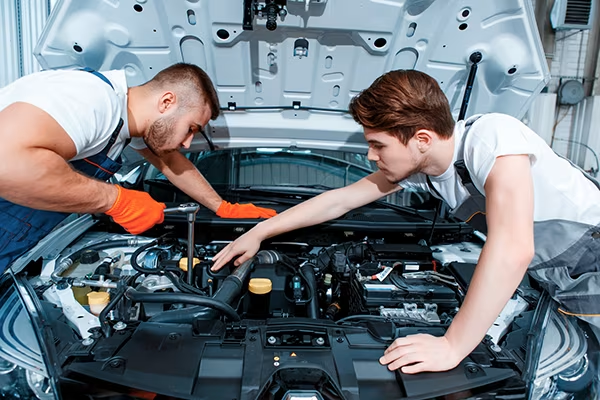
Ever fancied yourself as a dab hand under the bonnet? Well, why pay for basic repairs and car maintenance when you could do them yourself? The time and effort spent learning how to fix and look after your car could also prevent more serious problems down the line, saving you even more dosh.
Of course, if you're in doubt then seek professional advice, but if you're keen to learn for yourself then check with your local council, as well as nearby colleges, to see if they're running any cheap-ish car maintenance courses. For example, International Open Academy offers an online car maintenance course that costs £129. Use Find Courses to find lessons in your area.
You can also search online for tips, information and guides on how to look after your motor. The Useful Motoring Websites forum thread has a long list of helpful sites to visit, while the Car Maintenance Tips thread has a huge amount of information on fixing common car complaints.
-
Sell your car and stop driving
OK, it's a radical thought, and it's not right for everyone. But if your motor costs a fortune, it's worth considering: do you really need it? Or if you have two cars, do you need them both?
Think how much you would get from selling it, how much you'd save on insurance, tax, fuel and repairs compared to the cost of getting public transport.
Not only would it save you money, you'd be doing your bit for the environment. See the forum discussion on other people's experiences of selling their motor.
Share this guide?