Beware these AI-generated scam ads falsely featuring Martin Lewis
They're tricking people into handing over money using fake AI-generated adverts falsely linked to Martin Lewis – here's how to spot the warning signs and protect yourself

Since creating a specific email address a few months ago for MoneySavers to let us know about scam ads that use the face of Martin Lewis, I've been shocked – not only by the sheer number of scam ads being flagged, but by how widespread and sophisticated these scams have become.
Warning. The image shown blog below is an example of a fake, AI-generated image. These scam ads have no connection whatsoever to Martin Lewis, MoneySavingExpert or the BBC.
I've looked after the Fake Martin Lewis ads guide for a few years now, so I'm aware these types of scam have been around for a long time. But what's new is the pace and sophistication of these scams, which have increased dramatically in just a few months – clearly because scammers are now using artificial intelligence (AI).
I've seen a big jump in the number of 'deepfake' videos of Martin, many reported by MoneySavers, created by manipulating clips of him speaking. These can look convincing, though there are often warning signs, such as slightly unnatural speech, odd lip movements or messages that sound out of character. Some of these deepfakes even feature members of the wider MoneySavingExpert team in the background.
Yet there is one particular scam Martin ad, which MoneySavers are repeatedly telling us they're seeing online – with some losing money to it.
Watch out – this 'Martin Lewis' scam ad that I've seen reported widely
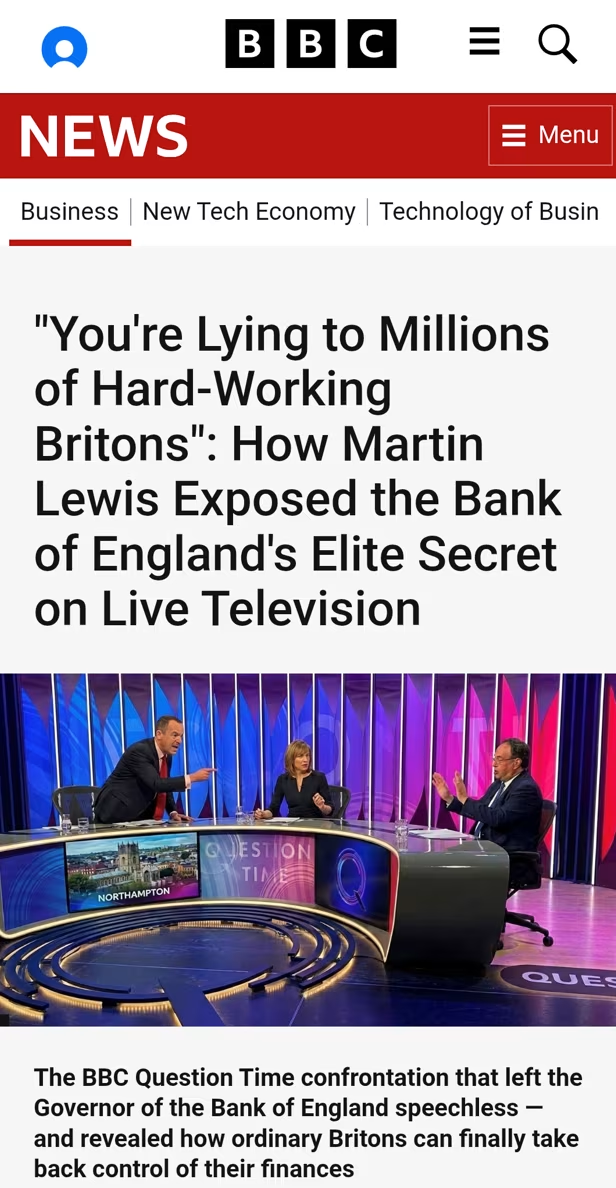
I've lost track of the number of MoneySavers reporting this particular 'Martin Lewis' scam ad. It appears to be popping up all over the web – typically in paid advert spaces – including in places like The Guardian, The Times, The Independent, Instagram and many more.
The scam is made to look like a genuine BBC news story (it's not), and uses AI-generated images of a fake Martin, alongside other recognisable people, to make it look compelling. It references an episode of BBC's Question Time (which is also a fake reference).
The scam falsely claims people can turn a small upfront payment into large guaranteed returns (in this case around £200 into £30,000 – a classic example of 'too good to be true' if ever I saw one).
We understand the scam is one version of a global scam where the recognisable faces appearing in it vary depending on where you live (UK viewers sometimes see Nigel Farage or Piers Morgan instead). But the premise is always the same – there's a secret, get-rich-quick scheme.
(Interestingly, as an aside, my colleague carried out a 'reverse image search', which suggested this scam uses material from a debate between Mitt Romney, Rick Santorum and Newt Gingrich during the 2012 US presidential election as a basis for the scam's appearance.)
My tips for being on your guard against scams like this
Having studied scams for a while now – and very nearly falling for one myself not that long ago – here are some tips I think can help you to stay safe from scams:
⚠️ Always check the URL. Don’t trust a page just because it looks like a familiar news site. Get into the habit of checking the URL before clicking any link, as it can help establish if something is legitimate or dodgy. The scam discussed in this blog looks, on the face of it, like a genuine BBC news story, but just a brief glance at the URL shows it's not going to www.bbc.co.uk.
⚠️ Find independent sources to help with verification. Use search engines to see if there are other sources to back up what you're reading. For example, if you search for 'Martin Lewis, Question Time' on Google, none of the results returned suggest that Martin has appeared on Question Time recently (which he hasn't).
⚠️ Sounds too good to be true? It probably is. Please don't dismiss this as a cliché. Lots of recent scam Martin Lewis ads encourage you to invest a relatively small sum like £200 and in exchange you'll be guaranteed a regular monthly income of around £30,000. That really is the definition of too good to be true.
⚠️ Look out for vulnerable people. Based on the emails I see from MoneySavers, scammers often appear to target older people and those less familiar with online scams. So if you know people who could be more susceptible, especially if they follow Martin or MSE, take a moment to warn them about these scams and that Martin doesn't do adverts.
⚠️ Videos, images and comments can now be very convincingly faked. So while it might feel slightly dystopian, don't immediately assume something you watch or read is real – especially if you're encouraged to part with money.
⚠️ Don't let your emotions be played upon. In the scam discussed here, it's implied that a get-rich-quick scheme is deliberately being kept secret from you, a classic tactic of playing upon your emotions.
⚠️ Is there a sense of urgency? Another common ploy of scammers is to instil a sense of urgency, for example 'sign up before this deadline' or 'act now or miss out'. A couple of years ago, I almost fell for a 'Booking.com' scam myself which used this very urgency tactic to reel me in.
⚠️ Had a close brush with a scammer? You'll likely be targeted again. For example, if you've shared your contact details with a scammer before, it's likely you'll be a target again – you'll need to be extra careful in future.
If you need more help with scams:
Help! I've been scammed – how to get your money back.
Fake Martin Lewis adverts – more on what to look out for.
20 tips to stop scams – how to protect yourself.
Seen a fake Martin Lewis advert or video online? You can forward it to us via email, including a screenshot or link where possible, as this helps us track the latest scams circulating online.
While we use these to inform our warnings and guides, unfortunately we can't investigate individual cases, recover lost money or respond to messages. If you've lost money or shared financial details, contact your bank immediately using the 159 number, and report the scam online to Report Fraud.



Share this guide?


 Latest weekly email








Recent blogs
 2 October 2026
 24 September 2026